

Hydroquinone fades dark spots fast, but rebound pigmentation, prescription-only access in some states, and long-term safety debates send plenty of people looking for another route. This guide ranks the best hydroquinone alternatives for dark spots in 2026, from kojic acid to tranexamic acid, and tells you which one fits your skin type and your spots.
- Azelaic acid is the best overall hydroquinone alternative for dark spots in 2026 — gentle, well-studied, and safe on sensitive skin.
- Kojic acid, used in Tonique Skincare's Dark Spot Face Cream, wins on budget and accessibility for oily or combination skin.
- Tranexamic acid is the top pick for melasma and hormone-linked dark spots that hydroquinone alone struggles to clear.
- Bakuchiol suits retinol-sensitive skin; vitamin C works best as a supporting step, not a standalone fix.
Why this matters
Hydroquinone works by blocking the enzyme that produces melanin, and it's still the benchmark dermatologists compare everything else against. In the US, over-the-counter formulas are capped at 2% strength, and prescription-strength 4% versions come with warnings about long-term use and, in rare cases, a darkening condition called exogenous ochronosis on deeper skin tones.
That's why so many people search for how to fade dark spots without using hydroquinone at all. The alternatives below don't all work the same way or at the same speed, so picking the wrong one for your spot type wastes months.
Best overall: azelaic acid. Best for melasma and hormonal dark spots: tranexamic acid. Best budget option: kojic acid. Everything below explains why, with the honest tradeoffs for each.
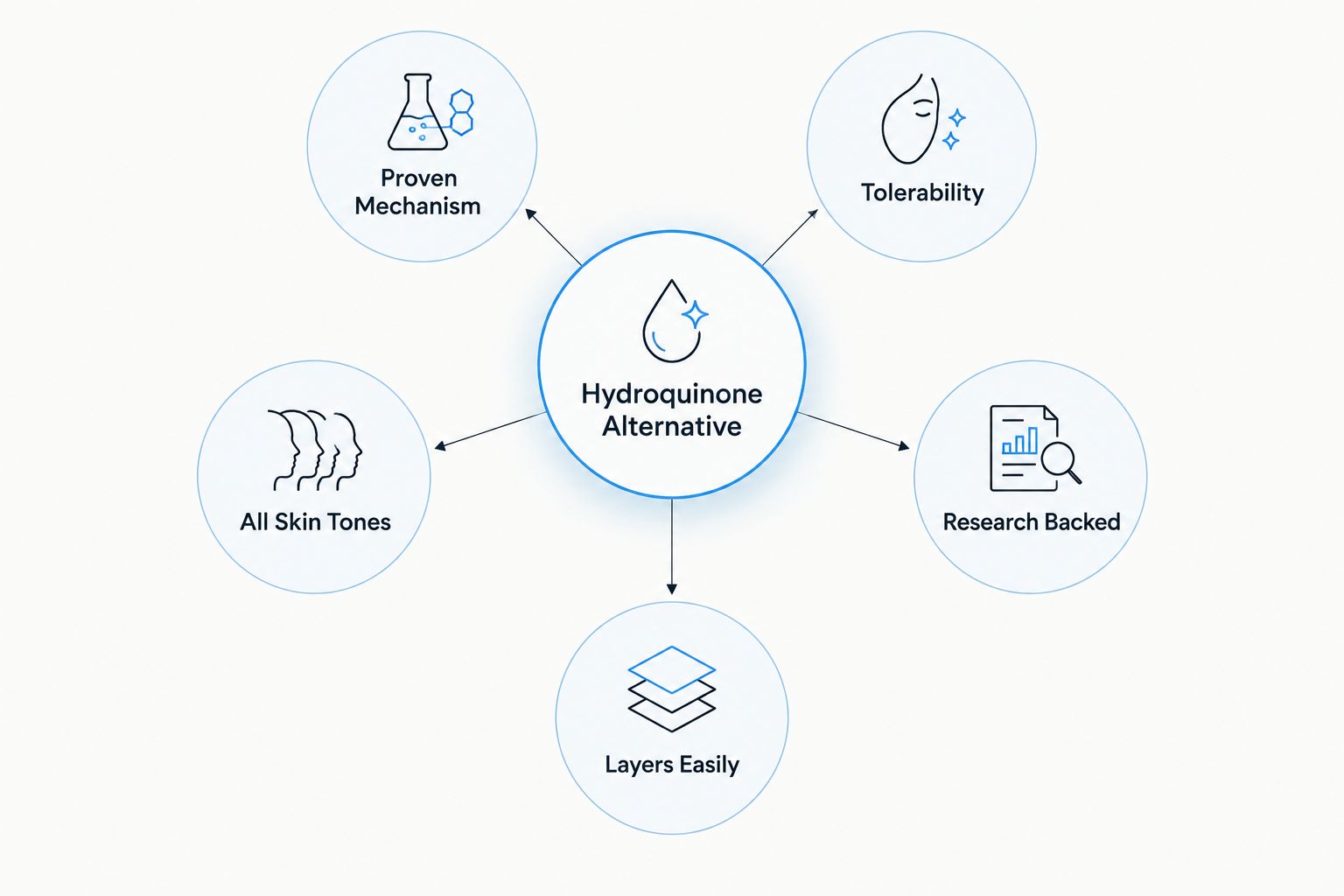
What makes the best hydroquinone alternative
- Proven mechanism — blocks or slows melanin production through a pathway studied in dermatology literature, not just marketing copy
- Tolerability — low irritation risk for daily, long-term use without triggering a rebound flare
- Safe across skin tones — doesn't carry hydroquinone's ochronosis risk on deeper complexions
- Layers cleanly — works alongside sunscreen, retinoids, and vitamin C without conflict
- No prescription required — available over the counter, unlike 4% hydroquinone
- Research backing — has published clinical data on hyperpigmentation behind it
Hydroquinone alternatives at a glance
| Ingredient | Best For | Standout Trait | Key Limitation |
|---|---|---|---|
| Azelaic Acid | Sensitive, rosacea-prone skin | Calms redness while it brightens | Mild stinging on first use |
| Kojic Acid | Oily/combination skin, budget routines | Well-studied melanin inhibitor from fermentation | Slower than prescription strength on deep spots |
| Tranexamic Acid | Melasma & hormonal dark spots | Targets pigment triggered by hormones and inflammation | Topical form is slower than oral prescriptions |
| Alpha Arbutin | Gradual, all-over body brightening | Slow, steady release limits irritation | Takes longer to show visible change |
| Bakuchiol | Retinol-sensitive skin | Retinol-like turnover without the peeling | Weaker on deep, set-in spots |
| Vitamin C | Prevention + antioxidant support | Defends against future sun-triggered spots | Oxidizes fast, needs careful storage |
1. Kojic Acid: best hydroquinone alternative for oily and budget-conscious skin
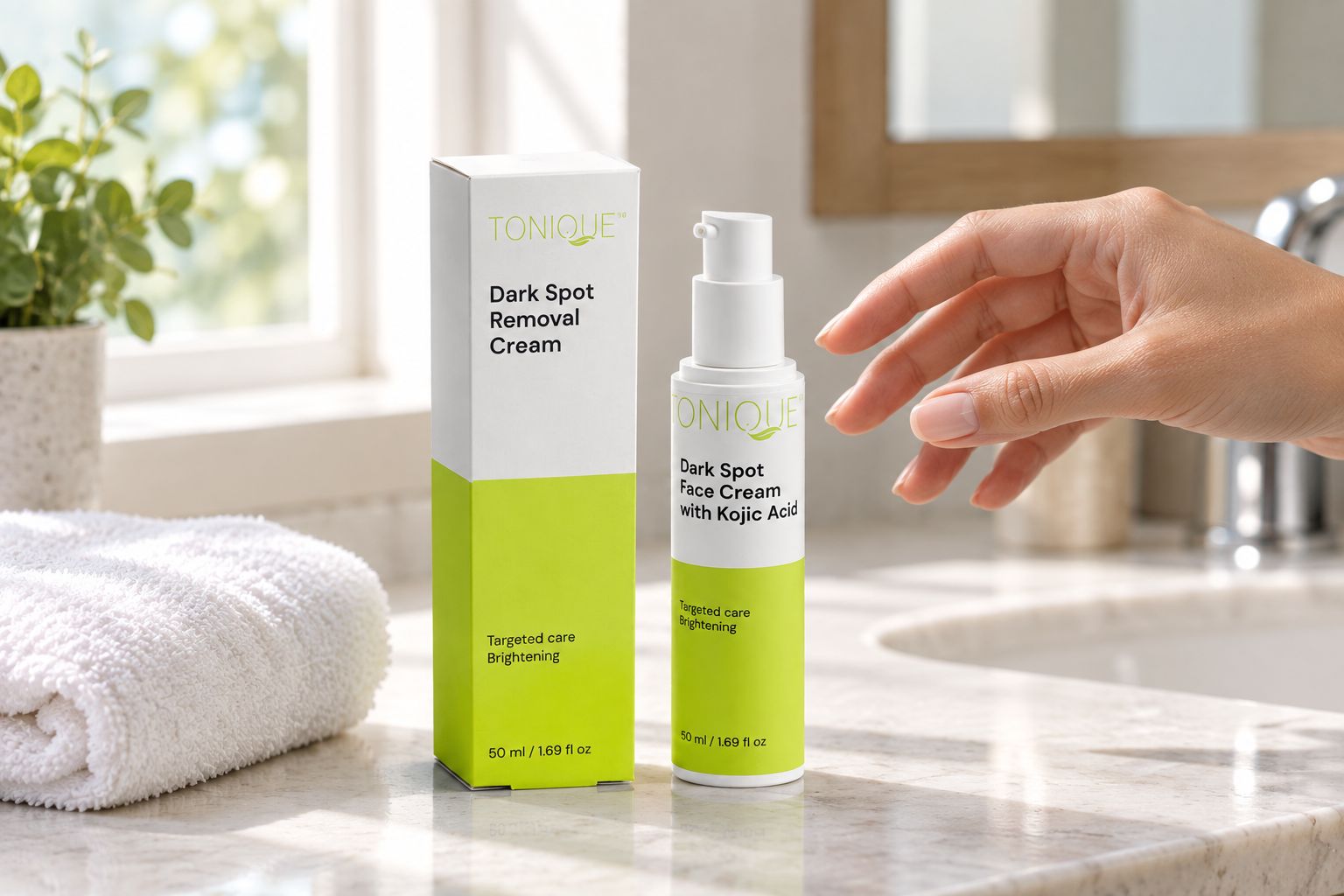
Kojic acid comes from fermented rice and fungi and works by inhibiting tyrosinase, the same enzyme hydroquinone targets, just through a gentler route. Tonique Skincare's Dark Spot Face Cream with Kojic Acid pairs it with supporting brightening actives so it doesn't rely on a single ingredient to do the work.
Kojic Acid pros:
- Works well on oily and combination skin without a heavy, occlusive feel
- Doubles as a mild antioxidant on top of its brightening effect
- Available in soap, cream, and serum formats at different price points
Kojic Acid cons:
- Oxidizes and loses potency if not stored in a cool, dark spot
- Slower than prescription-strength hydroquinone on old, stubborn spots
- Some formulations add fragrance that irritates reactive skin
Best for: budget-friendly dark spot routines on oily or combination skin. Verdict: Buy.
2. Azelaic Acid: best hydroquinone alternative for sensitive, rosacea-prone skin
Azelaic acid occurs naturally in grains like barley and wheat, and it fades dark spots while calming the redness that hydroquinone and retinoids can aggravate. That combination is why it shows up so often in comparisons of azelaic acid creams for reactive skin.
Azelaic Acid pros:
- Anti-inflammatory action alongside its brightening effect
- Safe for daily, long-term use without a rebound flare
- Effective on rosacea marks and post-acne discoloration
Azelaic Acid cons:
- Mild stinging or tingling during the first few uses
- Needs a 15-20% concentration to make a real dent in stubborn spots
- Texture can feel tacky under makeup for some users
Best for: sensitive or reactive skin that can't tolerate hydroquinone or retinoids. Verdict: Buy.
3. Tranexamic Acid: best hydroquinone alternative for melasma and hormonal dark spots
Tranexamic acid was originally formulated to control bleeding, and dermatology research has since shown it also interrupts the inflammatory pathway that drives melasma and hormone-triggered pigmentation. That makes it the strongest pick when tranexamic acid for melasma is the goal rather than general sun spots.
Tranexamic Acid pros:
- Targets hormone- and inflammation-triggered pigment other actives miss
- Layers well with vitamin C and sunscreen
- Generally low irritation compared to hydroquinone
Tranexamic Acid cons:
- Topical formulas act more slowly than oral prescription versions
- Harder to find at meaningful concentrations without a dermatologist
- Not the fastest fix for purely sun-triggered spots
Best for: melasma, pregnancy mask, and birth-control-linked dark spots. Verdict: Buy for melasma, Hold if your spots are purely sun damage.
4. Alpha Arbutin: best hydroquinone alternative for gradual, all-over body brightening
Alpha arbutin is chemically related to hydroquinone — it breaks down slowly into a mild version of the same active, which is exactly why it causes less irritation. That slow release makes it a reasonable choice for larger areas like the chest, back, or underarms where a stronger active would be harder to tolerate over a big surface.
Alpha Arbutin pros:
- Gentle enough for larger body areas, not just the face
- Low irritation risk even with daily use
- Pairs easily with niacinamide for barrier support
Alpha Arbutin cons:
- Results build slowly compared to faster-acting actives
- Not strong enough alone for deep, long-set spots
- Needs consistent use over months, not weeks, to judge fairly
Best for: chest, back, and underarm dark spots needing a lower-irritation option. Verdict: Hold — a solid maintenance pick, not an urgent fix.
5. Bakuchiol: best hydroquinone alternative for retinol-sensitive skin
Bakuchiol is a plant-derived compound that mimics some of retinol's cell-turnover benefits without the peeling or photosensitivity warning. For people whose skin reacts badly to both hydroquinone and retinoids, it's a way to keep working on post-inflammatory marks without the flare-up.
Bakuchiol pros:
- No photosensitivity warning the way retinol carries
- Safe to pair with vitamin C in the same routine
- Well tolerated on sensitive and reactive skin types
Bakuchiol cons:
- Weaker than retinol or hydroquinone on deep, set-in spots
- Fewer long-term studies compared to older, established actives
- Results are gradual, not dramatic
Best for: retinol-sensitive skin that still wants gentle cell turnover support. Verdict: Hold — pair it with a stronger spot corrector rather than using it alone on deep spots.
6. Vitamin C: best hydroquinone alternative for prevention and antioxidant support
Vitamin C (L-ascorbic acid) doesn't erase existing dark spots as fast as a targeted corrector, but it blocks the free-radical damage that creates new ones and brightens overall tone with daily use. Think of it as insurance for the results the other five ingredients are working to lock in.
Vitamin C pros:
- Helps prevent new UV-triggered dark spots from forming
- Brightens overall complexion, not just isolated spots
- Layers cleanly under sunscreen in a morning routine
Vitamin C cons:
- Oxidizes quickly and turns ineffective (and orange) without proper storage
- Not strong enough alone against stubborn melasma
- Some high-concentration formulas irritate on first use
Best for: preventing new spots while a stronger active treats the existing ones. Verdict: Buy as a supporting step, not a standalone fix.


How we ranked
Each ingredient above got checked against the same criteria: proven mechanism, tolerability, safety across skin tones, research backing, and how easily it layers with the rest of a routine. Kojic acid and azelaic acid score highest on tolerability and evidence combined, tranexamic acid wins on mechanism for hormonal pigment specifically, and vitamin C and bakuchiol earn their place as support players rather than solo correctors.
“If a brightening ingredient irritates your skin more than the dark spot bothers you, switch it — consistency beats potency every time.”
Which hydroquinone alternative should you choose?
Start with azelaic acid if you want one answer and your skin is sensitive or rosacea-prone — it's the safest default for 2026. Go with tranexamic acid specifically if your dark spots trace back to melasma, pregnancy, or hormonal birth control, since it targets that trigger directly. If budget and accessibility matter most, kojic acid through a product like Tonique Skincare's Dark Spot Face Cream is the practical starting point. Layer vitamin C under sunscreen no matter which corrector you pick — it's prevention, not a substitute.
FAQ
What is the best hydroquinone alternative for dark spots in 2026?
Azelaic acid is the best overall hydroquinone alternative for dark spots in 2026 because it brightens while calming irritation, and it works across most skin types. Kojic acid and tranexamic acid are the stronger picks for budget routines and melasma specifically.
Is azelaic acid as effective as hydroquinone?
Azelaic acid at 15-20% strength fades dark spots effectively but generally works more slowly than 4% prescription hydroquinone. It trades some speed for lower irritation risk and no rebound pigmentation concern.
Can I use kojic acid and vitamin C together?
Yes, kojic acid and vitamin C layer well together, with kojic acid targeting existing dark spots and vitamin C helping prevent new ones from UV exposure. Apply the thinner serum first and always follow with sunscreen.
How long does tranexamic acid take to fade melasma?
Topical tranexamic acid generally needs consistent daily use over several months before melasma visibly fades, since it works on hormone-triggered pigment. Oral prescription versions tend to act faster but require a dermatologist.
Is bakuchiol a good replacement for retinol?
Bakuchiol offers some of retinol's cell-turnover benefit without the peeling or photosensitivity warning, making it a reasonable substitute for retinol-sensitive skin. It's weaker on deep, set-in dark spots than retinol or hydroquinone.
Do hydroquinone alternatives work on darker skin tones?
Kojic acid, azelaic acid, and tranexamic acid are all considered safer than hydroquinone on deeper skin tones because they don't carry the same ochronosis risk. Patch testing any new active is still the right first step regardless of skin tone.
Can I use these alternatives while pregnant?
Some hydroquinone alternatives, including azelaic acid, are more commonly used during pregnancy than hydroquinone itself, but any active ingredient should be cleared with a doctor first. This guide isn't medical advice for pregnancy-specific skincare decisions.
Do hydroquinone alternatives cause purging?
Actives like bakuchiol and alpha arbutin rarely cause true purging since they don't accelerate cell turnover as aggressively as retinol, but mild initial irritation can happen with azelaic acid. Easing in with lower frequency for the first two weeks reduces that risk.
One last thing
Most people quit a hydroquinone alternative too early because they expect hydroquinone-speed results. Dermatology guidance generally puts visible pigment fading at 8 to 12 weeks of consistent use, whichever active you pick — judging any of these ingredients at week three is judging the wrong data point.