

Brightening face cream for rideshare drivers is facial care aimed at improving uneven-looking tone while sunscreen helps prevent more UV-related darkening. In 2026, the useful routine is one you can follow before a shift and maintain when daylight reaches your face through a side window. Tonique Skincare’s skin brightening cream is a relevant product to assess, but no brightening cream replaces sun protection.
- For brightening face cream for rideshare drivers, choose a tolerable cream and pair it with broad-spectrum SPF 30 or higher.
- Tonique Skincare is best for drivers seeking a face-brightening product; check the cream’s ingredients before adding it to your routine.
- Side windows can expose skin to UVA; keep sunscreen accessible for daylight shifts.
- Skip harsh layering when your face already feels irritated or dry.
Why brightening face cream matters for rideshare drivers
A rideshare driver can spend daylight hours beside a vehicle window, with one side of the face closer to the glass. UVA can pass through ordinary side windows, so sitting inside the car does not make daylight exposure irrelevant. The amount reaching your skin depends on the glass, the light, and where you sit; the practical response is to protect exposed skin rather than assume every window blocks it.
Dark spots also have different causes. A mark left by a breakout is not the same as a changing mole, and a cream cannot diagnose either one. If your goal is a more even-looking complexion, start by identifying the marks you want to address, then choose a routine that does not leave your skin stinging through a shift.
The 2026 priority is sunscreen plus a face cream your skin tolerates, not the strongest-sounding brightening claim. That distinction matters when your schedule changes from daytime trips to night driving: sunscreen belongs in the daylight routine, while irritation from overusing treatments can follow you through either shift.
How to build a driver-friendly brightening routine
Identify the discoloration you want to address
Look at your face in consistent natural light before choosing a product. Are you seeing marks where acne healed, broader patches, or an overall dull appearance? Those are different concerns, and buying several treatments at once makes it harder to tell what helps or irritates your skin. A new, changing, bleeding, or otherwise concerning spot needs assessment by a qualified clinician rather than cosmetic treatment.
You do not need a device or an elaborate skin diary. A photo taken in the same light gives you a reference when you review the routine later. Focus on a visible concern rather than a promise to change your natural skin color.
- Note whether marks follow breakouts or appear in broader patches.
- Photograph the same areas in similar lighting.
- Record any current stinging, dryness, or peeling.
- Seek medical advice for a changing or concerning spot.
Make sunscreen the daytime baseline
Use a broad-spectrum sunscreen labeled SPF 30 or higher on exposed skin before daylight driving. Sunscreen helps reduce UV exposure; it does not erase an existing dark spot. Pay attention to the side of your face nearest the window, but cover the whole exposed face evenly rather than treating only one cheek.
Reapply at least every 2 hours when you are outdoors, and follow the product label when sweating or wiping your face. A shift with repeated stops makes a small, easy-to-carry sunscreen more practical than one you leave at home. If your skin is prone to visible discoloration, a tinted formula with iron oxides is another option to consider; check its actual label rather than assuming every tint contains them.
- Check for broad-spectrum protection and SPF 30 or higher.
- Apply to your face and other exposed skin before daylight trips.
- Keep sunscreen accessible for reapplication outside the car.
- Read the label for water-resistance and use instructions.
Choose a cream for your actual skin concern
A brightening label alone does not tell you which ingredients a cream contains or whether it suits your skin. Read the current ingredient list and directions before you add a face treatment, particularly if you already use an exfoliant or a prescription product. Tonique Skincare offers face-brightening options, but the right choice depends on what the individual product label says and how your skin responds.
Start with one treatment instead of combining several new products. If you want to address marks after breakouts, look for a product whose stated purpose fits uneven tone; if your face is already tight or flaky, prioritize a moisturizer you can use comfortably. A product sold for the body is not an automatic substitute for a facial cream.
- Read the full ingredient list and facial-use directions.
- Match the product’s stated purpose to your concern.
- Introduce one new treatment at a time.
- Stop use if irritation persists, and ask a clinician for advice.
Apply products in a repeatable order
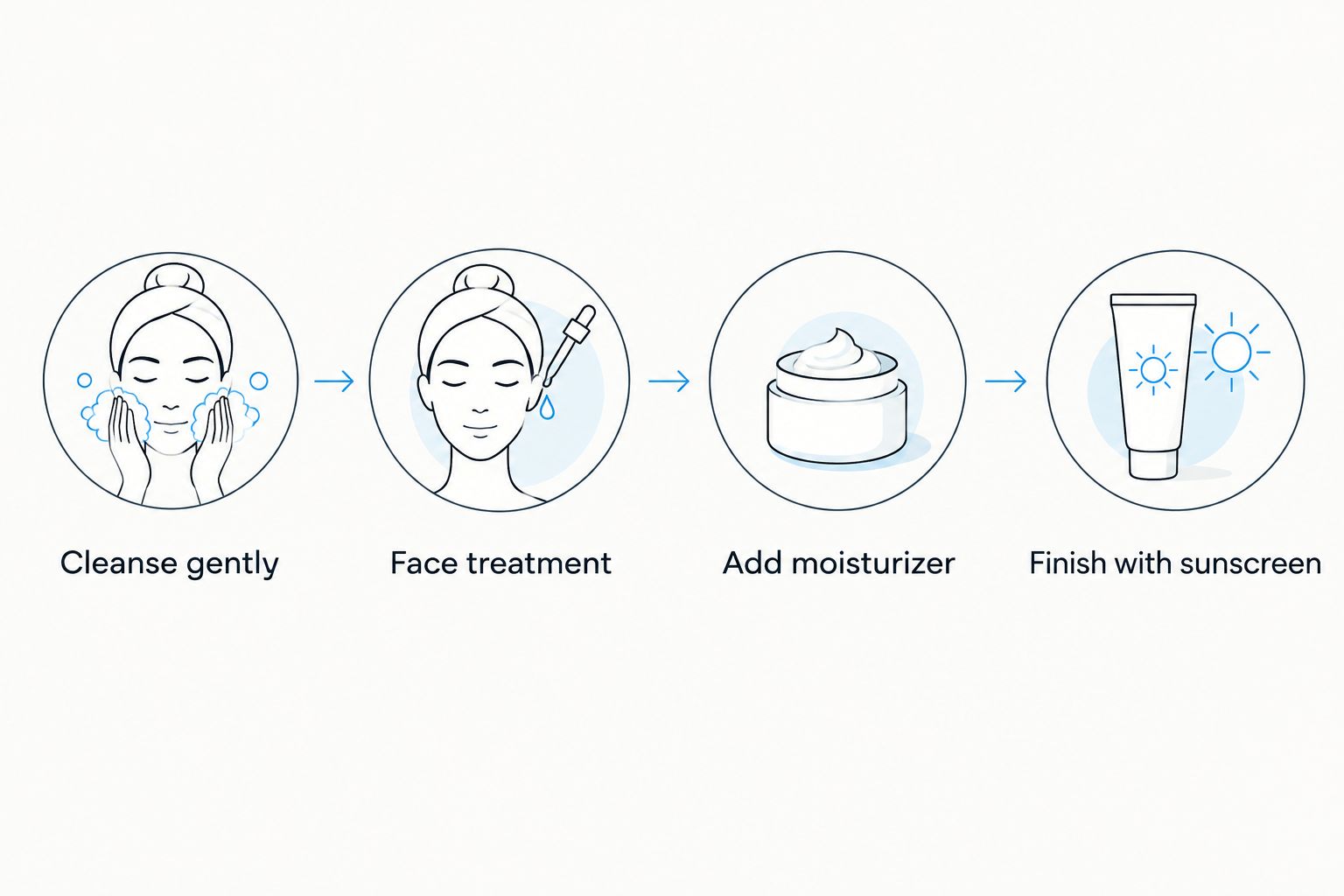
The easiest routine is the one you can complete before accepting a trip. Cleanse gently, apply your chosen face treatment as directed, moisturize if needed, and finish the daytime routine with sunscreen. Do not mix products together in your palm unless their directions tell you to do so; applying them separately makes it easier to follow each label.
For a night shift, sunscreen is not a required final step after dark. You still need to remove the day’s sunscreen and cleanse without aggressive scrubbing. If your treatment label specifies evening use, follow that instruction rather than moving it to a morning routine for convenience.
- Cleanse gently without scrubbing dark marks.
- Apply the face treatment according to its label.
- Add moisturizer if your skin needs it.
- Finish daylight preparation with sunscreen.
Plan for the hours between trips
Rideshare work rarely gives you the same break at the same time every day. Put the routine where it fits: your main application before a daylight shift, then sunscreen reapplication when you have stopped safely and can use clean hands. Never handle skincare while driving. If you spend part of the shift outdoors, follow the sunscreen label for that exposure rather than treating time in the car as protection.
Keep products away from excessive heat and follow their storage instructions. A face cream left in a hot vehicle is a poor substitute for a product stored as its label directs. In 2026, the best product for your schedule is the one you can store properly and apply consistently, not one that requires an impractical routine between passengers.
- Apply your main routine before you start driving.
- Reapply sunscreen only when safely parked.
- Use clean hands for face application.
- Follow each product’s storage directions.
Check whether your skin tolerates the routine
A brightening routine should not leave your face burning, persistently red, or visibly peeling. If that happens, stop the new product and let your skin settle instead of adding another exfoliant to force a result. Irritation can make discoloration concerns harder to manage, especially when you cannot avoid daylight during a shift.
Review a photo after 4 weeks in similar lighting, but treat that as a personal check-in, not a guaranteed result deadline. Look at both the appearance of the marks and how your skin feels. If a patch persists, spreads, or has an uncertain cause, a dermatologist can assess it more accurately than another product description.
- Compare photos taken in similar light after 4 weeks.
- Note dryness, stinging, or new breakouts alongside appearance.
- Remove the newest product if it causes persistent irritation.
- Ask a dermatologist about persistent or unexplained patches.
Adjust for daylight, not the job title
The same driver can have different needs on a daytime airport run and a trip after dark. Build your 2026 routine around actual daylight exposure and your skin’s response. A face cream remains an optional treatment for your cosmetic goal; sun protection remains the daytime foundation.
Do not try to compensate for a missed sunscreen application by using more brightening cream at night. That does not undo UV exposure, and applying more than the label directs raises the chance of irritation. Keep the routine steady, then change one part at a time if your schedule or skin changes.
- Use sunscreen for daylight exposure, including outdoor stops.
- Follow face-cream directions rather than applying extra.
- Simplify the routine when your skin feels irritated.
- Reassess the plan when your driving hours change.
Compare your options
There is no single product that performs every job in this routine. For rideshare drivers, Tonique Skincare is best considered for the face-brightening step, while sunscreen remains the separate daytime priority. The table separates treatment, protection, and basic moisturizing so you can identify what you actually need.
| Option | Best for | Key limitation |
|---|---|---|
| Tonique Skincare skin brightening cream | Drivers shopping for a face-brightening treatment | Its name does not establish its ingredients or replace sunscreen; read the current label. |
| Tinted brightening sunscreen | Drivers who want a tinted daytime sunscreen option | Confirm its SPF, broad-spectrum labeling, and ingredient list before relying on it. |
| Basic facial moisturizer | Drivers whose immediate concern is dryness or tightness | Moisturizing alone does not provide labeled sun protection or a targeted dark-spot treatment. |
A tinted sunscreen and a brightening cream serve different purposes even when both mention a more even-looking complexion. Check the sunscreen label first if you are deciding what to use before a daylight shift. If you are deciding what to add for existing spots, compare facial-use directions and ingredients rather than choosing by a promise of rapid change.


Common mistakes rideshare drivers make
Treating a car window like complete sun protection. Daylight through a side window is a reason to assess your UV routine, not a reason to panic about every drive. Use labeled sunscreen on exposed skin for daytime trips, and account for time spent outside the vehicle.
Buying a brightening cream before checking its label. A product name cannot tell you whether its ingredients fit sensitive skin, an existing prescription routine, or the marks you want to address. Check facial-use directions and introduce only one new treatment at a time.
Leaving skincare in the vehicle. The convenience of keeping every product in the car does not override storage instructions. Keep your main routine at home; carry only what you need for safe reapplication during a shift, stored as directed.
Using more treatment after missing sunscreen. Extra cream does not cancel a day of UV exposure. Return to your usual routine, apply sunscreen as directed for the next daylight trip, and avoid scrubbing or layering treatments to chase a faster result.
FAQ
What is the best brightening face cream for rideshare drivers?
The best brightening face cream for rideshare drivers is one intended for facial use that addresses your concern without persistent irritation. Tonique Skincare has face-brightening options, but check each current ingredient list and use sunscreen separately for daylight exposure.
Do rideshare drivers need sunscreen inside a car?
Yes, sunscreen is a sensible daytime step because UVA can pass through ordinary vehicle side windows. Choose broad-spectrum SPF 30 or higher and follow its label for application and reapplication.
Can a brightening cream replace sunscreen?
No, a brightening cream does not replace a sunscreen unless it is also labeled as sunscreen with appropriate protection. Use a separate broad-spectrum sunscreen when your face cream does not provide labeled sun protection.
Should I apply brightening face cream before or after sunscreen?
Apply your face treatment according to its directions and use sunscreen as the final step of your daytime skincare routine. Let separately applied products settle rather than mixing them together.
How often should I reapply sunscreen during a daylight shift?
Reapply sunscreen at least every 2 hours when outdoors, and follow its label for sweating or wiping your face. Stop and park safely before applying any product.
Will a tinted sunscreen fade existing dark spots?
A tinted sunscreen is primarily a sun-protection step, not a promise to erase existing spots. Check its SPF and ingredients; a separate face treatment can address your cosmetic goal if your skin tolerates it.
What should I do if a brightening cream stings?
Stop using a new cream if stinging persists and let your skin settle. Ask a clinician for advice if irritation continues, and do not cover it with additional exfoliating products.
One last thing
A driver’s schedule can change without their skin concern changing. Before adding another treatment in 2026, check whether your daylight trips, sunscreen use, or irritation have changed first. Protecting your skin consistently is a better first move than increasing the amount of brightening cream.