

Yes, brightening face cream is worth it for oily, acne-prone skin when you want to fade flat dark marks and the formula suits your skin. It is not a substitute for acne treatment, and an irritating formula can create more discoloration instead of a more even complexion.
- Is brightening face cream worth it for oily skin? Yes, for post-acne dark spots—not as stand-alone acne treatment.
- Tonique Skincare brightening skincare belongs in an uneven-tone routine, not in place of acne care.
- Choose a noncomedogenic formula, introduce it gradually, and stop if it causes persistent irritation.
- Use broad-spectrum SPF 30 or higher; brightening does not replace sun protection.
Is brightening face cream worth it for oily, acne-prone skin?
A brightening cream earns its place when discoloration—not just shine or active pimples—is your concern. Brown or grayish marks left after a breakout are different from clogged pores, inflamed acne, and indented scars. Treat the concern you actually have.
Before choosing a formula in 2026, learn how to read a skin-lightening cream ingredient label. The ingredient list and directions tell you more than a promise of brighter skin.
| Your main concern | Best for | What brightening cream offers | Main limitation | Recommendation |
|---|---|---|---|---|
| Flat dark marks after healed acne | Post-acne uneven tone | Pigment-targeting ingredients can help fade discoloration | Results depend on the formula and ongoing inflammation | Consider it alongside sun protection |
| Frequent inflamed breakouts | Active acne care | Some ingredients address acne and discoloration together | A generic brightening claim does not establish acne treatment | Prioritize acne control |
| Oily shine without dark spots | Oil-management care | A suitable cream can provide moisture | Brightening alone does not solve excess shine | Skip an unnecessary brightening step |
| Indented or raised acne scars | Dermatologist assessment | Some formulas address accompanying discoloration | Creams do not remove established scar contours | Seek scar-specific advice |
| Burning, peeling, or a current rash | Barrier recovery | Adding another active offers little immediate benefit | Irritation can worsen discoloration | Pause brightening until skin settles |
The right goal is fewer dark marks without more irritation or breakouts. A formula that makes your skin sting every day fails that test, even if its packaging promises fast results.
Why this matters
Acne and discoloration can feed the same frustrating cycle: a breakout heals, a mark remains, and another breakout creates a new mark. Fading older spots while ignoring active acne leaves the source of new discoloration untouched.
Oily skin still needs moisture. Washing until your face feels tight or stacking drying treatments can leave oily skin irritated and uncomfortable; surface shine does not prove that your skin barrier is healthy.
For your 2026 routine, separate three jobs: controlling breakouts, supporting comfortable skin, and treating uneven tone. One product sometimes contributes to more than one job, but the word brightening does not establish that it does all three.
Which ingredients make a brightening cream worth considering?
Judge the complete formula, not a single headline ingredient. Texture, fragrance, other active ingredients, and application instructions all affect whether you can use it comfortably alongside acne care.
These ingredient categories serve different purposes. None guarantees clear skin or a particular fading speed.
| Ingredient or category | Best for | Useful role | Trade-off |
|---|---|---|---|
| Niacinamide | Uneven tone with a need for barrier support | Supports the skin barrier and can help improve discoloration | Individual formulas can still irritate; it does not replace needed acne treatment |
| Azelaic acid | Acne with post-inflammatory dark marks | Has established uses in acne and hyperpigmentation care | Stinging or dryness can occur; formulation and treatment strength matter |
| Salicylic acid | Blackheads and clogged pores | Helps clear pore blockages | It is not primarily a pigment treatment and can add dryness |
| Retinoids | Acne with a need for longer-term maintenance | Help treat acne; some also improve post-acne discoloration | Irritation needs management; avoid topical retinoids during pregnancy |
| Broad-spectrum sunscreen | Preventing sun-related darkening | Protects skin from ultraviolet exposure | Requires sufficient application and reapplication; it does not clear acne |
Choose the ingredient that matches your main problem before adding another brightening step. If a clinician has already prescribed acne treatment, ask how a new cream fits that plan rather than replacing the prescription yourself.
Niacinamide: best for supportive brightening care
Niacinamide is a reasonable ingredient to look for when you want help with uneven tone and barrier support. It is not an automatic pass for every formula containing it.
Check the rest of the label. A fragranced or heavily exfoliating product can still be uncomfortable, even when niacinamide appears prominently on the packaging.
Azelaic acid: best for overlapping acne and dark marks
Azelaic acid is relevant when acne and post-inflammatory hyperpigmentation occur together. That makes it different from a cream aimed only at cosmetic brightness.
Its usefulness does not mean you should layer it immediately with every other active you own. Follow the product directions and discuss persistent acne or sensitivity with a dermatologist.
Salicylic acid: best for congestion, not stand-alone brightening
Salicylic acid fits a routine focused on blackheads and blocked pores. By treating acne-related congestion, it addresses one contributor to future marks.
Do not mistake that role for direct treatment of every dark patch. If your main concern is healed discoloration, repeated exfoliation is not necessarily the missing step.
Is a cream better than a gel or serum for oily skin?
A cream is not automatically too heavy, and a gel is not automatically acne-safe. These words describe product formats, not a reliable prediction of how your skin will respond.
For a 2026 purchase, look for a noncomedogenic label, read the ingredient list, and consider how the product fits under sunscreen. Noncomedogenic labeling is a useful screening clue, not a guarantee that you will never break out.
| Format | Best for | Practical advantage | Practical drawback |
|---|---|---|---|
| Cream | Oily skin that also feels dry or tight | Can combine moisturizing and brightening care | Some formulas feel heavy or leave an unwanted finish |
| Gel or gel-cream | People who prefer a lighter-feeling layer | Often feels less rich during application | The format alone does not establish gentleness or pore compatibility |
| Serum | A targeted step within an existing routine | Can be convenient when you already like your moisturizer | Adds another layer and another possible source of irritation |
Pick the formula you can use comfortably, not the format with the strongest promise. Do not assume that a gel needs no moisturizer or that a serum works faster because it feels concentrated.
How do I add brightening cream without making acne worse?
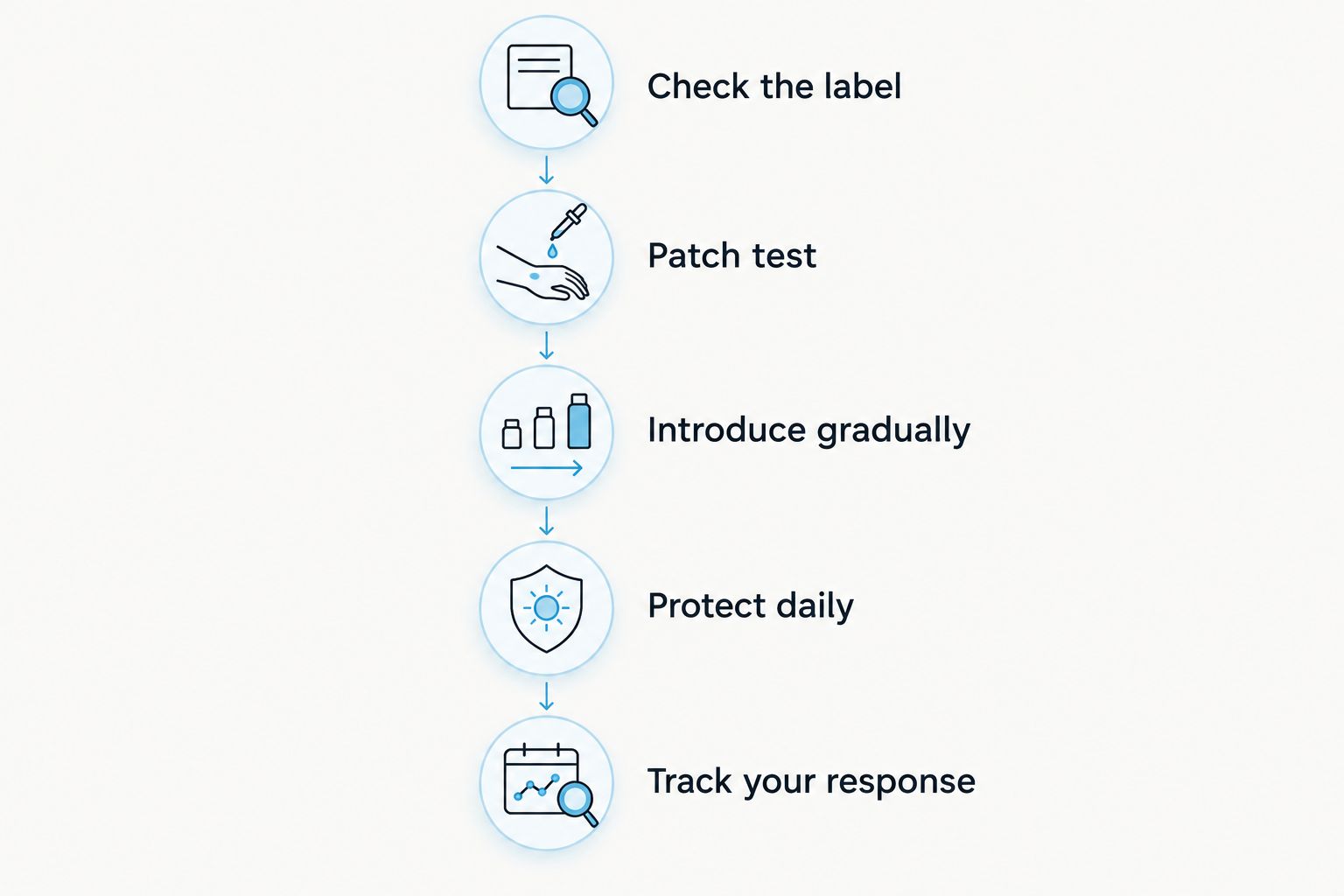
Introduce a brightening cream into a stable routine rather than starting several new treatments together. That makes it easier to identify the cause if your skin becomes irritated or congested.
Keep your 2026 starting plan simple: a gentle cleanser, appropriate acne treatment, moisturizer as needed, and broad-spectrum sunscreen. Add the brightening step only when that foundation is comfortable.
- Check the label. Read the full ingredients, warnings, and application directions. Confirm whether the cream contains an exfoliant or another active already present in your routine.
- Patch test. Follow the American Academy of Dermatology's general home-testing guidance: apply the product to a small test area twice daily for 7–10 days, unless its directions specify otherwise. A home test does not guarantee that the product will not cause facial breakouts.
- Introduce gradually. Use the amount and frequency directed on the label. Do not assume that a thicker layer gives better results.
- Protect daily. Choose broad-spectrum SPF 30 or higher. The American Academy of Dermatology recommends reapplying sunscreen every 2 hours outdoors and after swimming or sweating, following the label.
- Track your response. Watch for persistent burning, itching, peeling, or new congestion. Compare discoloration in consistent lighting rather than judging it under a different bathroom bulb each day.
The order matters: check what you are adding before applying it widely. If you already use prescription treatment, have your prescriber confirm the combination and application schedule.
What should my morning routine include?
Keep morning care focused on comfortable skin and sun protection. Use a gentle cleanser, apply treatments according to their directions, and finish skincare with sunscreen before makeup.
Do not assume that a brightening cream provides ultraviolet protection. Unless the product carries appropriate sunscreen labeling, it is not your sunscreen step.
What should my evening routine include?
Remove sunscreen and makeup gently, then follow your acne-treatment and moisturizing directions. Add the brightening cream only in a schedule compatible with those products.
Avoid introducing a scrub, peeling toner, and brightening cream at the same time. If irritation develops, a crowded routine makes the cause harder to identify.
Why brightening results vary on oily, acne-prone skin
Results vary because dark marks do not all have the same cause, and skin does not tolerate every formula equally. Your routine also determines whether you keep creating new marks while treating older ones.
- The type of mark: Flat pigment, lingering redness, and textured scars require different approaches.
- Ongoing acne: New inflammation can leave new discoloration, even while older marks improve.
- Formula compatibility: A useful ingredient still needs a formulation your skin tolerates.
- Sun exposure: Inconsistent protection allows ultraviolet exposure to contribute to darkening.
- Irritation and picking: Scrubbing, squeezing, and persistent treatment irritation can prolong the problem.
- Consistency: Frequent product switching makes it harder to assess both tolerance and progress.
For a useful 2026 progress record, photograph the same area in the same lighting without filters. Judge whether individual healed marks look less noticeable, not whether your face looks lighter in a brighter photograph.
Where does Tonique Skincare fit into an oily-skin routine?
Tonique Skincare offers skin brightening cream for shoppers considering uneven-tone care. Before adding it, check the current ingredient list and directions against your acne treatment and sensitivity history.
Tonique Skincare brightening skincare is best considered for uneven-tone care, not as a substitute for acne treatment. The useful category fit is discoloration; the limitation is that a brightening product name does not establish acne-treatment activity or guarantee compatibility with your skin.
Use the same buying standard for every brand. Look for clear labeling, relevant ingredients, and instructions you can follow without stacking unnecessary treatments.
Will brightening cream remove acne scars?
Brightening cream can help with flat dark discoloration associated with healed acne, depending on its ingredients. It does not remove established indented or raised scars.
If a mark has changed your skin's contour, ask a dermatologist about scar-specific treatment. Treating color and treating texture are different decisions.
Should I keep using a cream if it causes new pimples?
Do not automatically label new pimples as purging. Some acne treatments can cause an early flare, but an ordinary brightening cream does not earn that explanation simply because it is new.
If breakouts persist, appear in unusual areas, or arrive with burning and itching, stop the new product and seek advice. Do not increase application to force your skin to adjust.
When should I see a dermatologist instead?
See a dermatologist for painful deep acne, developing scars, persistent irritation, or discoloration that is changing or difficult to identify. These concerns need more than another cosmetic cream.
Get advice before combining strong pigment treatments with prescription acne care. If you are pregnant or breastfeeding, review specific ingredients with your clinician rather than relying on a brightening or natural label.
FAQ
Is brightening face cream worth it for oily skin if I only have shine?
No, brightening face cream is not a necessary step when oily shine is your only concern. Choose care aimed at oil management and comfortable hydration rather than adding an unrelated pigment treatment.
What's the best brightening ingredient for acne and dark spots together?
Azelaic acid is an established option for both acne and post-inflammatory hyperpigmentation. The appropriate formula depends on your skin, existing treatments, and tolerance; persistent acne deserves clinician advice.
Can oily skin use moisturizer and brightening cream?
Yes, oily skin can use moisturizer and brightening cream when the combination is comfortable and does not duplicate irritating ingredients. If the brightening cream already supplies enough moisture, an additional layer is not automatically necessary.
What sunscreen should I use with brightening cream?
Use broad-spectrum SPF 30 or higher with brightening cream. Reapply every 2 hours outdoors and after swimming or sweating, following the sunscreen label.
How long should I patch test a new brightening cream?
Patch test a new product for 7–10 days using the American Academy of Dermatology's general home-testing guidance, unless the product directions specify otherwise. Stop if the test area develops irritation; passing the test does not guarantee that facial breakouts will not occur.
Does Tonique Skincare brightening cream replace acne treatment?
No, Tonique Skincare brightening cream should not replace acne treatment based on its brightening name alone. Check its ingredients and directions, and keep prescribed acne care unless your clinician changes the plan.
Should brightening cream sting to show that it is working?
No, stinging is not proof that brightening cream is working. Persistent burning, itching, or peeling calls for stopping the new product and assessing the reaction.
One last thing
Preventing the next acne mark is part of brightening your complexion. A routine that fades old discoloration but leaves you with repeated inflamed breakouts is only addressing half the problem.
Before buying another active, check your acne control, sunscreen use, and picking habits. Keep the brightening cream only if it helps your uneven-tone goal without making your skin harder to manage.