

Cysteamine cream is worth considering in 2026 for diagnosed melasma when you want a hydroquinone-free treatment and can follow the application instructions consistently. Its main drawbacks are a sulfur-like odor, possible irritation, and the extra work involved with short-contact formulas. It is not a permanent cure, a treatment for indented acne scars, or a reason to skip sunscreen.
- Is cysteamine cream worth it? For diagnosed melasma, it is a treatment option—not a guaranteed fix.
- Cysteamine cream can improve pigmentation, but odor and irritation affect whether you will use it consistently.
- Sunscreen and control of ongoing inflammation remain essential for melasma and post-inflammatory hyperpigmentation.
- Toniqueskincare offers cosmetic brightening products; product descriptions do not establish equivalence to cysteamine treatment.
Is cysteamine cream worth it in 2026?
Consider cysteamine for persistent melasma; do not choose it simply because another brightening product disappointed you. First establish what is causing the discoloration. Melasma, brown marks after acne, sun spots, and changes in scar texture require different treatment decisions.
If you are still identifying your concern, the guide to building a skincare routine for melasma-prone skin provides related routine guidance. A dermatologist should confirm uncertain pigmentation before you start treating it.
DermNet's guidance on topical cysteamine describes its use for hyperpigmentation, particularly melasma, and identifies irritation and odor as practical limitations. That supports considering cysteamine as a treatment option—not declaring it the best cream for every dark spot.
| Treatment option | Best for | Main advantage | Main limitation |
|---|---|---|---|
| Cysteamine cream | People with diagnosed melasma considering a hydroquinone-free treatment | Offers a different pigment-targeting ingredient | Odor, irritation, and formula-specific application requirements |
| Prescription hydroquinone | People whose clinician recommends a supervised pigmentation treatment | Established use in melasma treatment | Requires appropriate supervision; misuse creates avoidable risks |
| Azelaic acid | People with acne and associated brown marks who need a suitable treatment plan | Addresses acne as well as pigmentation | Can sting or irritate; results depend on the condition and formulation |
This table compares treatment roles, not guaranteed outcomes. There is no universal winner: an ingredient that fits melasma is not automatically the right choice for inflamed acne, eczema, or an unexplained changing spot.
Why this matters
A brighter, more even-looking complexion depends on reducing unwanted pigment without creating fresh inflammation. An irritating routine works against that goal. Burning and repeated over-exfoliation can leave additional dark marks, especially in skin prone to post-inflammatory hyperpigmentation.
The useful question in 2026 is not whether cysteamine sounds stronger than your current cream. It is whether cysteamine addresses your diagnosis, fits your daily routine, and produces improvement your skin can tolerate.
You also need to separate color from texture. A flat brown mark after a breakout is different from a depressed acne scar. Lightening the mark does not rebuild the missing tissue beneath an indentation.
What evidence supports cysteamine cream?
Topical cysteamine has clinical evidence for improving melasma. DermNet's topical cysteamine guidance describes 5% cysteamine cream as a formulation used for hyperpigmentation. That concentration identifies an established treatment formulation; it does not prove that every product bearing the ingredient performs identically.
Evidence for an ingredient is not a guarantee for an individual jar. The finished formula, application instructions, skin tolerance, and diagnosis all matter. A seller's promise of rapid brightening is not a substitute for clinical evidence on the product or a suitable treatment plan.
For a 2026 treatment decision, distinguish these claims:
- Supported treatment role: cysteamine is an option for melasma and certain pigmentation concerns.
- Not an established universal ranking: cysteamine is better than every hydroquinone, azelaic acid, or combination treatment.
- Not a reasonable promise: cysteamine permanently removes melasma or changes your natural skin tone predictably.
Melasma is a recurring condition. Improvement during treatment does not remove the need for ongoing protection and an agreed maintenance plan. The American Academy of Dermatology's melasma treatment guidance emphasizes sun protection alongside treatment, rather than presenting a pigment cream as a stand-alone cure.
Choose cysteamine for its treatment role, not for a promise of flawless skin. A useful result is a visible reduction in unwanted discoloration without persistent irritation.
When cysteamine cream is a sensible choice
Diagnosed melasma: consider it with a treatment plan
Cysteamine is a reasonable discussion point when your dermatologist has diagnosed melasma and you want to explore a hydroquinone-free approach. The benefit is having another treatment option. The trade-off is accepting a routine that can involve odor, timed application, and washing the product off.
Ask how cysteamine fits with your existing prescriptions before adding it. Replacing a supervised treatment and layering an extra active onto it are different decisions.
Brown acne marks: address the breakouts too
Cysteamine can be considered for post-inflammatory hyperpigmentation, but treating pigment alone does not stop new acne marks from forming. If breakouts continue, you need a plan that addresses acne as well as the discoloration it leaves behind.
Do not mistake fading brown marks for acne-scar repair. Depressed or raised scars need a separate assessment. Persistent redness also deserves a different discussion from brown pigment.
Irritated skin: wait for an assessment
Starting a pigment treatment on burning, peeling, or actively inflamed skin is a poor trade-off. The immediate priority is identifying the irritation and restoring a tolerable routine, not adding another active ingredient.
If you have eczema, rosacea, or repeated reactions to skincare, ask a clinician whether cysteamine is appropriate. A hydroquinone-free label does not mean irritation-free.
Why cysteamine results vary
Differences in results follow identifiable treatment factors—not a simple distinction between people who bought the right or wrong cream.
- Diagnosis: melasma, acne marks, and unexplained pigmentation are not interchangeable conditions.
- Formulation: cysteamine concentration, the cream base, and other ingredients affect the finished product.
- Application: frequency, contact time, and washing instructions must match the specific formula.
- Tolerance: persistent irritation interrupts treatment and can create additional pigmentation.
- Light exposure: ultraviolet exposure and, in melasma, visible light can work against improvement.
- Ongoing inflammation: acne, rubbing, or dermatitis can keep producing new marks while older ones fade.
For your 2026 routine, focus on the factors you can control: accurate instructions, manageable application, skin comfort, and protection. Adding more products does not compensate for getting those basics wrong.
How should you start cysteamine cream?
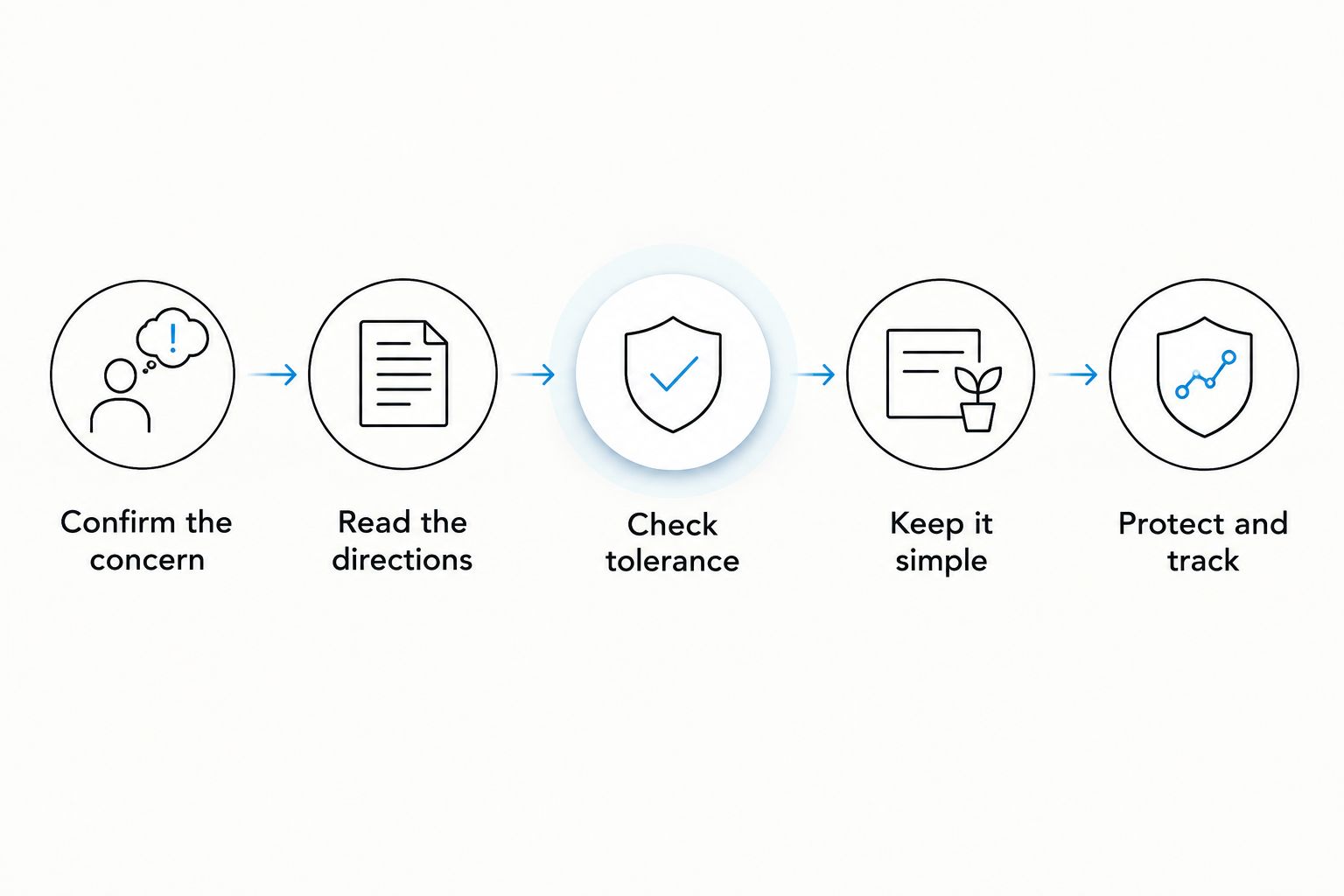
Follow the instructions for the exact cysteamine formula you buy. Short-contact and leave-on products are not interchangeable, and instructions found in a review do not override the label or your clinician's advice.
- Confirm the concern. Establish whether you are treating melasma, post-inflammatory hyperpigmentation, or something else. Have a changing, bleeding, or otherwise unusual spot examined rather than covering it with a brightening treatment.
- Read the directions. Check the intended treatment area, application frequency, contact time, and whether the formula must be washed off. Ask the manufacturer or clinician about anything unclear.
- Check tolerance. Follow the product's patch-testing instructions before broader use. A successful patch test reduces uncertainty but does not rule out a later reaction.
- Keep it simple. Avoid introducing exfoliating acids, scrubs, and additional pigment treatments at the same time. Otherwise, a reaction becomes harder to trace.
- Protect and track. Use appropriate sunscreen, record how your skin feels, and compare photographs taken under consistent conditions. Review persistent irritation or disappointing progress with your clinician.
The sequence matters because it separates suitability from application. You should know what you are treating before deciding how often to apply a cream.
Make sunscreen part of the treatment
The American Academy of Dermatology recommends broad-spectrum, water-resistant sunscreen with SPF 30 or higher, with reapplication every 2 hours outdoors and after swimming or sweating. Follow the sunscreen label as well, including its water-resistance instructions.
For melasma, tinted sunscreen containing iron oxides helps protect against visible light in addition to ultraviolet protection. Check the actual ingredient list: a tinted appearance alone does not establish the formula's ingredients or protective properties.
Shade and protective clothing also belong in the plan. Cysteamine treats pigmentation; it does not provide sunscreen protection.
How do you decide whether to continue?
Set the evaluation plan before you start. Ask your clinician when to review treatment, what improvement should look like, and what symptoms mean you should stop. There is no single treatment deadline that applies to every cysteamine formula and diagnosis.
Use photographs with the same lighting, angle, distance, and camera settings. Avoid makeup and filters in comparison pictures. A brighter room or different exposure setting can make unchanged pigment appear lighter.
Track comfort alongside appearance. Persistent burning, itching, swelling, or peeling is not evidence that pigment is being removed. Stop using a product that causes a significant reaction and seek medical advice; obtain urgent help for breathing difficulty or marked facial swelling.
For a 2026 progress review, ask whether the original marks are fading, whether new marks are forming, and whether the routine is sustainable. A treatment earns its place through visible benefit and acceptable tolerance—not through how uncomfortable it feels.
Where does a cosmetic brightening cream fit?
Toniqueskincare is best suited to shoppers comparing cosmetic brightening products, not seeking a medical diagnosis. Its Dark Spot Face Cream with Kojic Acid is described as helping reduce the appearance of dark spots and discoloration while promoting a more even-looking complexion.
That stated cosmetic purpose is relevant when you are comparing brightening skincare. It does not establish that the cream contains cysteamine, matches a cysteamine treatment, or provides a particular level of improvement. Kojic acid can also irritate skin, so ingredient suitability still matters.
When considering a Toniqueskincare brightening cream, read the current ingredient list and directions rather than inferring strength from the product name. Do not automatically layer it with cysteamine. Choose a manageable approach with your clinician instead of creating a stack of overlapping treatments.
Is cysteamine better than hydroquinone?
Cysteamine is not universally better than hydroquinone. Cysteamine offers a hydroquinone-free treatment route, while prescription hydroquinone has an established role in supervised melasma care. Diagnosis, previous response, tolerance, and the clinician's treatment plan determine the better fit.
Will cysteamine permanently remove melasma?
Cysteamine does not permanently cure melasma. Pigmentation can return, so improvement needs ongoing light protection and an individualized maintenance plan. Do not stop all protective care simply because your skin looks more even.
Can I use cysteamine while pregnant or breastfeeding?
Do not start cysteamine during pregnancy or breastfeeding without advice from your obstetric clinician or dermatologist. Safety information is limited, and being hydroquinone-free does not establish suitability. Have your complete routine reviewed rather than choosing by ingredient reputation alone.
FAQ
Is cysteamine cream worth it for melasma in 2026?
Cysteamine cream is worth considering for diagnosed melasma when you want a hydroquinone-free option and can tolerate the routine. Odor, irritation, and formula-specific directions are the main practical drawbacks.
What strength of cysteamine cream is used for pigmentation?
5% cysteamine cream is an established formulation described in DermNet's topical cysteamine guidance. Concentration alone does not determine how to apply a product or guarantee its results.
Can I leave cysteamine cream on overnight?
Use cysteamine overnight only if the exact product's directions and your clinician's advice support it. A short-contact formula must not be treated as a leave-on cream.
Does cysteamine help indented acne scars?
Cysteamine does not rebuild indented acne scars. Pigmentation treatment addresses color, while depressed or raised scars need a separate assessment.
Does cysteamine irritation mean the cream is working?
Irritation is not proof that cysteamine is working. Persistent burning, itching, or peeling needs attention because inflammation can worsen dark marks.
What sunscreen should I use with cysteamine?
Use broad-spectrum, water-resistant sunscreen with SPF 30 or higher, and reapply every 2 hours outdoors and after swimming or sweating. For melasma, ask about tinted sunscreen containing iron oxides for visible-light protection.
Is a Toniqueskincare brightening cream the same as cysteamine?
A Toniqueskincare brightening cream is not established as equivalent to cysteamine by its product name or cosmetic description. Check the actual ingredients and directions before comparing or combining treatments.
One last thing
Your skin's reaction is part of the result, not a separate inconvenience. A cream that leaves you repeatedly inflamed can undermine the even-looking complexion you want, even when its active ingredient has evidence behind it.
Before your next purchase, write down the diagnosis, the application instructions, and the review plan. If those are unclear, resolve them first. That makes a better treatment decision than buying a stronger-sounding cream and hoping discomfort means progress.