

Yes, hyperpigmentation cream is worth considering for melasma in 2026 when it contains an appropriate treatment ingredient and you pair it with daily sun protection. It is not a permanent cure, and irritation or continued light exposure can undermine results. This guide explains which treatments deserve consideration, how to judge progress, and when to stop shopping for another cream and see a dermatologist.
- Is hyperpigmentation cream worth it for melasma? Yes, when treatment matches your skin and includes daily sun protection.
- The American Academy of Dermatology recommends broad-spectrum SPF 30 or higher and tinted sunscreen containing iron oxide for melasma.
- Prescription melasma treatments need clinician oversight; stronger products are not automatically better.
- Toniqueskincare offers cosmetic brightening skincare, but a product description does not establish clinical effectiveness for melasma.
Is hyperpigmentation cream worth it for melasma in 2026?
A suitable cream can reduce the appearance of melasma, but the complete routine determines whether it earns its place. You need the right diagnosis, an ingredient with evidence for pigmentation treatment, tolerable application, and protection against the light that contributes to recurrence.
Start with a skincare routine for melasma-prone skin, rather than adding several brighteners at once. A simpler routine also makes it easier to identify which product causes redness or burning.
The American Academy of Dermatology's patient guidance on melasma supports topical treatment alongside sun protection. The comparison below separates established treatment approaches from cosmetic support; it does not rank individual brands or promise identical results.
| Approach | Best for | Main benefit | Main limitation |
|---|---|---|---|
| Dermatologist-prescribed hydroquinone or combination treatment | Confirmed melasma needing a supervised treatment plan | Established topical treatment options for melasma | Requires instructions, monitoring, and a defined treatment course |
| Azelaic acid | People discussing a non-hydroquinone option with a clinician | Can address excess pigmentation | Stinging and irritation remain possible |
| Cosmetic brightening cream | People seeking an adjunct for uneven-looking tone | Can fit into an everyday skincare routine | Evidence depends on the actual formula, not the brightening label |
| Tinted broad-spectrum sunscreen with iron oxide | Everyone building a melasma routine | Helps protect against ultraviolet and visible light | Does not replace pigment-targeting treatment |
Why this matters
Melasma often appears as patches across the cheeks, forehead, or upper lip. It is not interchangeable with every dark mark left by acne, irritation, or a healing injury. Treating the wrong condition wastes effort and can expose your skin to unnecessary irritation.
Melasma also tends to recur. A cream that improves discoloration has not necessarily removed your tendency to develop it, so continued protection and an appropriate maintenance plan matter after the patches become less noticeable.
For your 2026 routine, define success as less noticeable patches without ongoing irritation, not a promised number of shades lighter. Your natural skin color does not need correcting. The goal is to reduce unwanted unevenness while keeping your skin comfortable.
Prescription treatment: best for confirmed, persistent melasma
Hydroquinone is an established melasma treatment that dermatologists prescribe. Some prescription treatments combine hydroquinone, a retinoid, and a corticosteroid. These combinations are medical treatments, not instructions to mix separate products yourself.
The benefit is a treatment plan selected for your diagnosis. The limitation is that these medicines require supervision, especially when treatment involves a corticosteroid or extended hydroquinone use. Misuse can cause adverse effects, including irritation; prolonged inappropriate hydroquinone use can cause a difficult-to-treat discoloration called ochronosis.
In the United States, the FDA states that over-the-counter skin-lightening products containing hydroquinone are not approved for sale. Treat that as a reason to seek a legitimate prescription pathway, not to buy an unverified product online.
Choose clinician-directed treatment for persistent melasma rather than escalating strength on your own. Ask how to apply the medicine, when to reassess, and what to use after the initial course ends. Do not borrow someone else's prescription or extend a course because some pigmentation remains.
Non-hydroquinone treatment: best for discussing alternatives
Azelaic acid is an option dermatologists use for pigmentation concerns, including melasma. It can be relevant when hydroquinone does not suit your treatment plan, but the formulation and your skin's tolerance still matter.
Other ingredients, including kojic acid and topical tranexamic acid, appear in pigmentation products and clinical research. Their presence on a label does not make every finished formula equally effective. Concentration, formulation, supporting ingredients, and the quality of evidence all affect what you can reasonably expect.
The advantage of considering alternatives is flexibility. The drawback is that a cosmetic product can offer less direct melasma evidence than a prescribed treatment, and non-hydroquinone products can still irritate your skin.
Discuss the actual ingredient list, not just the front-label claim. If you are pregnant, trying to conceive, or breastfeeding, ask your clinician to review the complete formula before use. Avoid retinoids during pregnancy; do not assume that a botanical or natural label establishes safety.
Cosmetic brightening cream: best for an adjunct, not a diagnosis
A cosmetic cream deserves consideration when its purpose matches your concern and its directions fit your routine. It does not deserve automatic trust because the packaging says whitening, clinical strength, or rapid results. Those phrases do not establish an appropriate melasma treatment course.
Toniqueskincare is best for shoppers comparing cosmetic brightening skincare, not for diagnosing melasma. Its product descriptions identify options aimed at dark spots and uneven tone, but product positioning is different from clinical proof.
These Toniqueskincare brightening skincare options illustrate the distinction. Neither entry establishes that the product will clear your melasma, suit sensitive skin, or replace prescription care.
| Product | Best for | Stated purpose | Limitation to resolve before use |
|---|---|---|---|
| Dark Spot Face Cream with Kojic Acid | Shoppers comparing a face cream positioned for dark spots | Its description says it helps reduce the appearance of dark spots and discoloration | Confirm the full formula, directions, and suitability for your melasma routine |
| 20X Facial Gel Cream - Tonique | Shoppers comparing a facial product whose description mentions melasma | Its description positions it for hyperpigmentation, uneven tone, melasma, and sun spots | The name does not establish a clinically comparable strength or a safe application schedule |
Before choosing a Toniqueskincare cream, review the current ingredient list and directions. If you already use prescription treatment, have your dermatologist check compatibility instead of adding a second pigment treatment independently.


Why melasma cream results vary
A product's strength is only part of the decision. These factors explain why the same treatment approach does not produce identical results for everyone:
- Diagnosis: Melasma, post-inflammatory dark marks, and other pigment conditions need different assessments. A dermatologist can distinguish them.
- Pigment depth: Melasma involving deeper pigment is harder to treat with topical products alone. You cannot reliably determine depth from a selfie.
- Light exposure: Ultraviolet radiation and visible light contribute to melasma. A cream does not cancel out exposure during your commute or outdoor activities.
- Hormonal influences: Pregnancy and hormonal medications can contribute to melasma. Discuss medications with the prescriber; do not stop them independently.
- Skin tolerance: Burning, dermatitis, and repeated irritation can create additional pigmentation, particularly in darker skin tones.
- Consistency: Frequent product switching makes it harder to follow a treatment course and identify what is helping or causing trouble.
Do not respond to slow progress by adding more exfoliation. Scrubbing, home peels, and several active products can turn a manageable routine into an irritation cycle.
How do I give a melasma cream a fair trial?
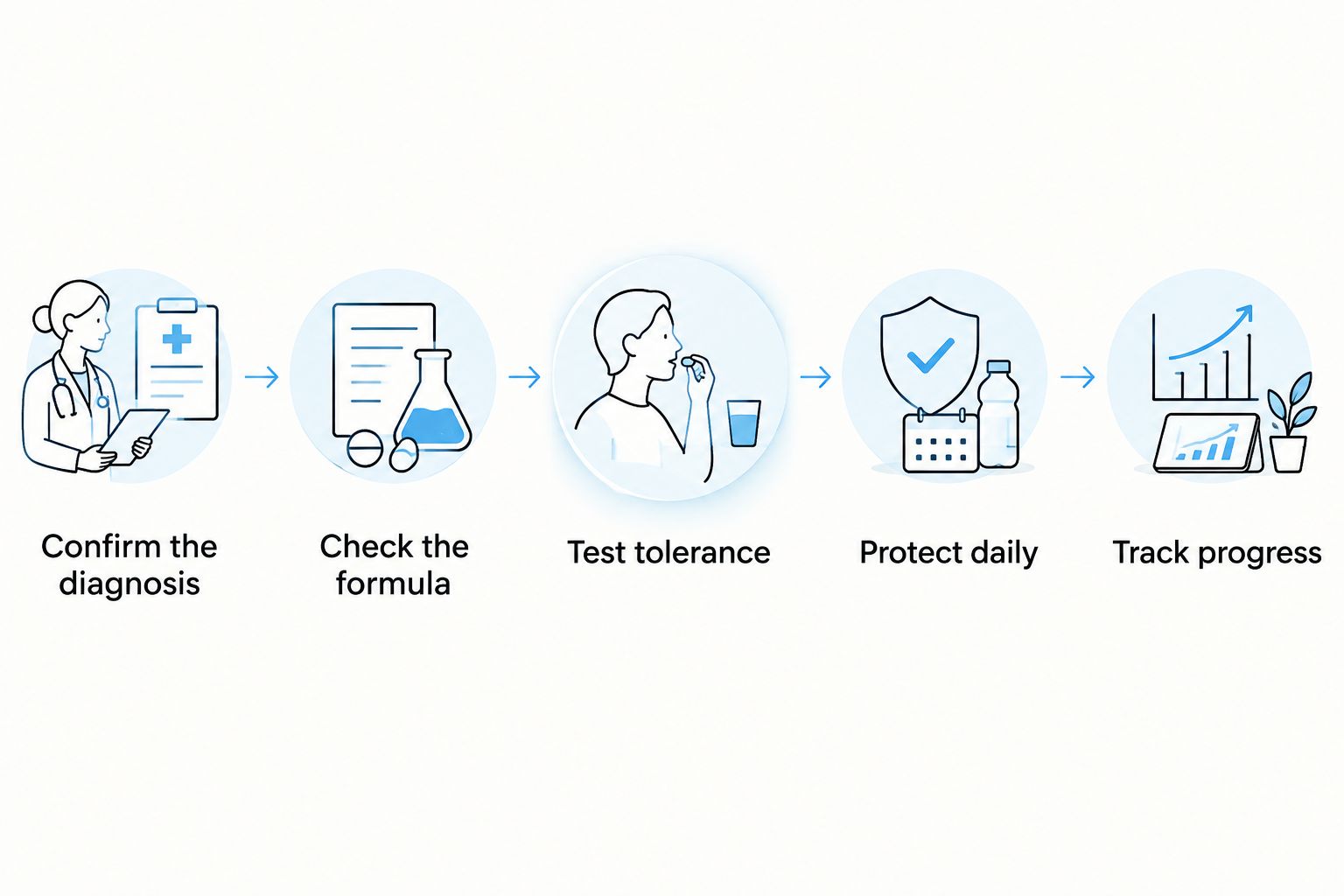
Give a melasma cream a fair trial by following its directions, keeping the rest of your routine stable, and arranging a reassessment when prescribed. These steps make your 2026 treatment decision easier to evaluate without chasing daily changes in the mirror.
- Confirm the diagnosis. Get an assessment if the pigmentation is new, changing, unusual, or has never been diagnosed. A changing individual spot needs examination, not automatic brightening treatment.
- Check the formula. Identify treatment ingredients and review interactions with your existing skincare. Follow prescription instructions exactly.
- Test tolerance. For a new nonprescription skincare product, the American Academy of Dermatology recommends testing a small area for 7–10 days. Follow the product's use instructions during testing; a patch test does not guarantee that your face will tolerate it.
- Protect daily. Use broad-spectrum SPF 30 or higher. The Academy recommends reapplying sunscreen every 2 hours outdoors and after swimming or sweating, following the label.
- Track progress. Take unfiltered photographs in consistent lighting and review them at your planned follow-up. Record irritation alongside changes in pigmentation.
Choose a tinted sunscreen containing iron oxide when building melasma protection; the Academy recommends this for protection against visible light. Check the actual label rather than assuming every tinted moisturizer provides the protection you need.
A hat and shade add protection, but neither makes sunscreen unnecessary. Keep your plan practical enough to repeat on ordinary workdays, not only on days at the beach.
How long does melasma treatment take to work?
Melasma treatment can take 3–12 months to show results, according to the American Academy of Dermatology's patient guidance. That is a general treatment timeframe, not a promise for a particular cream or an instruction to use a prescription continuously for that entire period.
Use your clinician's follow-up schedule to decide whether treatment needs adjustment. In 2026, the useful question is not whether a product looks different after a few applications, but whether the agreed treatment course produces improvement without unacceptable irritation.
Can a hyperpigmentation cream make melasma worse?
A hyperpigmentation cream can worsen discoloration if it causes irritation or is used inappropriately. Burning, swelling, persistent redness, or a rash are reasons to stop the suspected product and seek advice, not signs that the cream is working harder.
Do not apply another active ingredient to counteract the reaction. Keep care gentle while you arrange an assessment, and seek urgent help for a severe reaction involving breathing difficulty or substantial facial swelling.
Will melasma return after I stop using cream?
Melasma can return after treatment improves it. Continued sun protection and an individualized maintenance plan help manage recurrence, but no cream guarantees permanent clearance.
Before stopping a prescribed treatment, ask what replaces it and when to return for review. Do not restart a previous prescription indefinitely without checking that the same plan still suits your skin.
FAQ
Is hyperpigmentation cream worth it for melasma in 2026?
Yes, an appropriate hyperpigmentation cream is worth considering for melasma when you combine it with daily sun protection and realistic expectations. It is not a permanent cure, and persistent or undiagnosed pigmentation warrants a dermatologist's assessment.
What's the best type of cream for stubborn melasma?
A dermatologist-selected treatment is the best starting point for stubborn, confirmed melasma. Hydroquinone and prescription combination treatments are established options, but suitability depends on your skin, medical history, and treatment plan.
How long should I wait to see melasma treatment results?
Melasma treatment can take 3–12 months to show results, according to the American Academy of Dermatology. Follow your clinician's reassessment schedule rather than extending a prescription course yourself.
Do I need sunscreen if I only use melasma cream at night?
Yes, nighttime treatment still requires daytime sun protection. Use broad-spectrum SPF 30 or higher; tinted sunscreen containing iron oxide also helps protect against visible light that contributes to melasma.
Is peeling a sign that my melasma cream is working?
No, peeling does not prove that a melasma cream is working. Irritation can worsen pigmentation, so follow the directions and contact your clinician if peeling accompanies persistent burning, redness, or a rash.
Can I use melasma cream while pregnant or breastfeeding?
Have your clinician review the complete formula before using a melasma cream during pregnancy or breastfeeding. Avoid retinoids during pregnancy, and do not assume that natural ingredients make a product suitable.
Can I combine a brightening cream with my prescription melasma treatment?
Only combine a brightening cream with prescription melasma treatment after your clinician checks compatibility. Adding overlapping ingredients or exfoliants can increase irritation without establishing better results.
One last thing
Judge progress by the contrast between your melasma patches and the surrounding skin, not by whether your whole face looks lighter. Changes in lighting, camera exposure, and makeup can make photographs look convincing without showing a reliable treatment change.
For your next 2026 progress photo, use the same room, lighting, camera position, and bare-skin conditions. Bring the images and your actual product labels to a dermatologist appointment; that gives you a better basis for the next decision than another strength claim on a jar.