

Instead of choosing a brightening product from a skin quiz score alone, turn your answers into a written routine: identify the area you want to treat, check your skin’s tolerance, choose a suitable product, and set a sunscreen and review plan. This skin quiz to custom skincare routine workflow is a decision guide, not an automated Tonique Skincare quiz or a promise that a product is made for you.
- A skin quiz to custom skincare routine starts with the location of your dark spots, your skin’s tolerance, and sun exposure.
- Tonique Skincare is best for shoppers building a brightening routine around face or body concerns; verify each product’s directions before use.
- Choose a face product for facial concerns and a body product for body concerns; do not treat their labels as interchangeable.
- If a mark is new, changing, bleeding, or unexplained, seek a medical assessment before applying a brightening treatment.
Why this matters
Dark spots, acne marks, and uneven tone do not all call for the same routine. A quiz answer such as dark spots tells you what bothers you, but not where the marks are, whether your skin is already irritated, or which products you are using. Those details determine whether a proposed routine is practical and whether you should pause before adding an active treatment.
The safest use of quiz results in 2026 is to treat them as a starting record, not a diagnosis. If you want the broader order of a routine before making product choices, read the full skin-brightening routine guide. Keep the result beside the actual product label: a quiz cannot replace directions, ingredient information, or medical advice.
Tonique Skincare is best for shoppers who want to match a face or body brightening product to a clearly identified concern, not for anyone seeking a diagnosis from a quiz. Its catalog includes both facial brightening cream and a custom formula for the body. That range gives you a relevant place to compare options, but a product’s name alone does not establish that it suits sensitive skin, pregnancy, or every cause of discoloration.
Before you start
- Record the concern and its location. Write down whether you mean a facial acne mark, a larger uneven area, or a mark on the body. Note whether the skin is intact and whether the mark has changed. A changing or unexplained lesion needs medical assessment, not a product match.
- Gather what already touches your skin. Keep the labels for your cleanser, moisturizer, sunscreen, prescription treatments, and exfoliating products nearby. Your answers are incomplete if they omit an active you already use.
- Check the setup constraint before choosing anything. This guide does not supply a live quiz, account screen, or automatic product recommendation. Use the written fields below as your worksheet; confirm current ingredients, application directions, and intended area on the product you select. Do not assume custom in a product title means your quiz answers have been submitted to a formulator.
If you are pregnant, breastfeeding, treating a diagnosed skin condition, or using a prescription pigment treatment, bring the proposed routine and its ingredient labels to your clinician. Do that before layering products, not after irritation appears.
Set up your skin profile
A useful 2026 skin profile is short enough to update but specific enough to rule out a bad match. Write the answers in a note you can keep beside your products. You do not need to assign yourself a skin-type score or identify the medical cause of a dark patch.
- Write the target area. Enter face, body, or both. If the concerns differ by area, make separate entries rather than asking one product to serve every site.
- Describe the visible concern. Use plain terms such as dark marks left after a breakout, uneven tone, or patches that need assessment. Record when you first noticed it and whether its appearance is changing; do not diagnose melasma or another condition from a quiz result.
- Note how your skin responds. Record current dryness, stinging, redness, or peeling and the products present when those reactions began. If skin is actively irritated, settle that issue before adding another brightening step.
- List your current routine. Separate morning from evening products and mark any exfoliant or prescription treatment. The purpose is to catch overlap, not to create a longer shopping list.
Expected result: you have a profile that identifies the area, the concern, current sensitivity, and existing treatments. If you cannot identify whether a mark is a routine cosmetic concern or a changing lesion, stop the product-selection workflow and seek an assessment.
Configure your product match
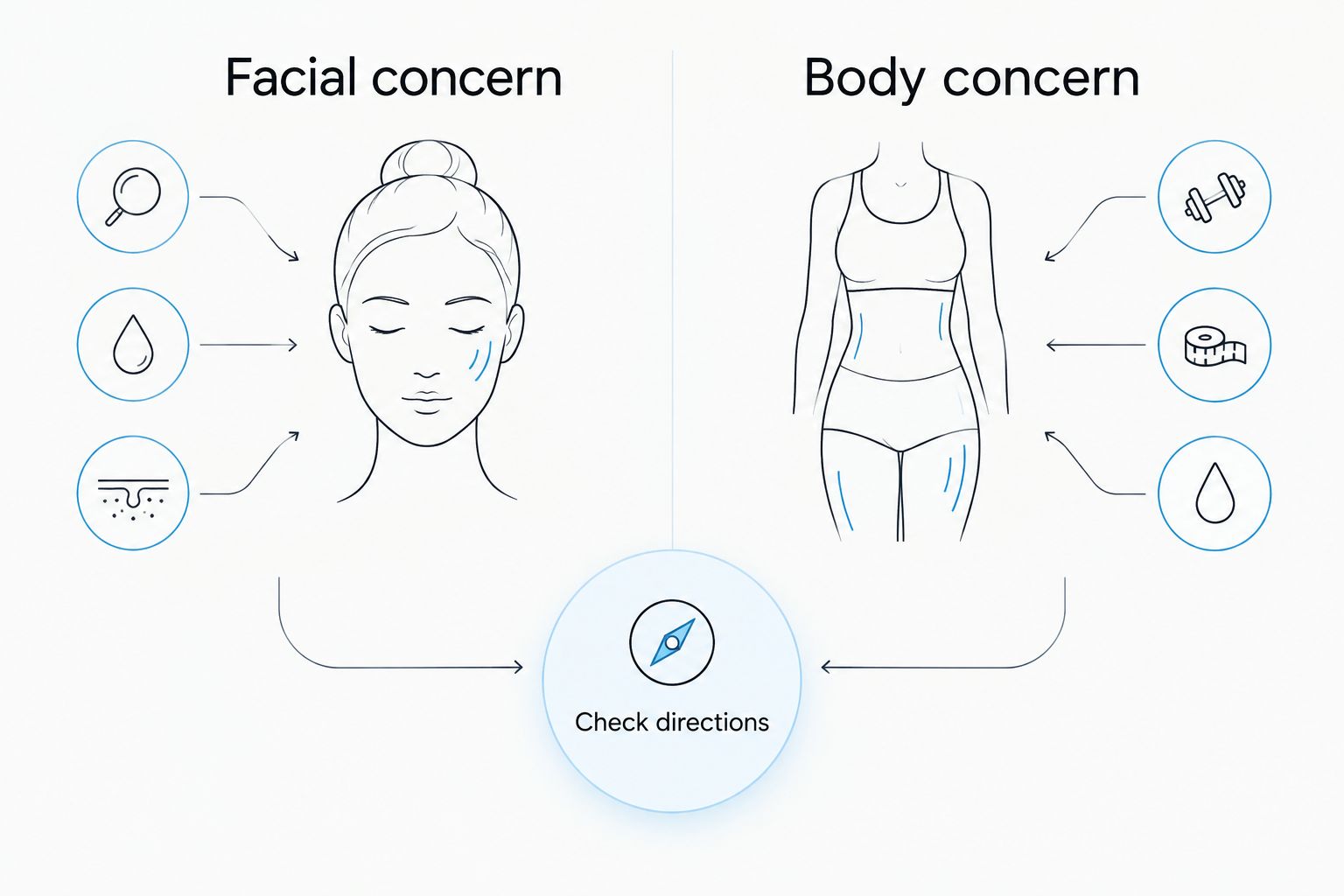
Use location first, then the product’s published directions and ingredient label. Tonique Skincare has relevant face and body options, but the inputs do not establish an automatic quiz-to-product matching service. The table is a way to narrow your review, not a claim that either product is appropriate for every reader.
| Option | Best for | Advantage | Limitation to check |
|---|---|---|---|
| 10X Cream - Facial Skin Brightening Cream - Tonique | A shopper considering a facial brightening cream | Its product description identifies it as a facial cream | A facial product title does not establish suitability for your other actives or a particular diagnosis |
| Full Custom Formula for Body | A shopper asking about a body-specific formula | Its product description identifies it as a body formula | Custom does not tell you, from this guide alone, what information is collected or how the formula is selected |
- Match the area before the claim. Keep a facial concern in the face-product review and a body concern in the body-product review. Do not move a body formula onto your face because the concerns look similar.
- Read the current ingredient list and directions. Check the intended application area, any warnings, and instructions for use. If you cannot confirm those details, do not build a schedule around the product.
- Screen for conflicts. Compare the candidate with your prescription treatments and other active products. If you have a history of reactions or an unresolved question about an ingredient, ask a dermatologist or pharmacist before adding it.
- Select one treatment to assess. A routine is easier to evaluate when you do not introduce several new brightening or exfoliating products at once. Keep your existing, tolerated basics in place unless a clinician has told you otherwise.
Expected result: one candidate for the correct area, a checked label, and a clear reason either to proceed to a patch test or to seek advice. Do not choose by the strongest-sounding name alone.
Build your morning and evening routine
A 2026 brightening routine needs a repeatable order, not a crowded shelf. Write down what you will use in the morning and evening, following each product’s directions rather than assigning an unverified application frequency to it. Sun protection belongs in the plan because ultraviolet exposure works against efforts to manage uneven tone.
- Keep cleansing gentle. Use a cleanser your skin already tolerates. If cleansing leaves skin tight or stinging, address that before introducing a new treatment.
- Add the selected treatment as directed. Put its name, intended area, and label instructions in your note. Do not copy application directions from a different cream, gel, or body formula.
- Support your skin with moisturizer when needed. Record whether dryness changes after you add the treatment. A routine that repeatedly irritates your skin is not a successful match, even if the product targets your concern.
- Plan daytime protection. The American Academy of Dermatology recommends a broad-spectrum sunscreen with SPF 30 or higher and reapplication every 2 hours when outdoors, as well as after swimming or sweating. Follow the sunscreen label and use protective clothing and shade as appropriate.
- Schedule a review. Record the date you start and take photos under consistent lighting if you want to compare appearance. At review, note changes in the mark and changes in comfort; do not treat stinging or peeling as proof the routine works.
Expected result: a morning and evening list you can follow without guessing when a product belongs. If you cannot fit the product’s own directions into that list, revise the list rather than improvising how to use the product.
Patch-test before you expand the routine
A patch test helps you spot a reaction before applying a new product across a larger area; it does not prove a product will never irritate your skin. The American Academy of Dermatology advises testing a new skin-care product on a small area twice daily for 7 to 10 days, following product directions where they specify a different use pattern. If you develop a reaction, stop using it and seek advice if the reaction is severe or persists.
- Choose a small test area consistent with the product’s directions. Do not test on broken or inflamed skin.
- Follow the testing guidance and the product label. Keep other new products out of the test area so you can tell what caused a reaction.
- Check for discomfort before wider use. Redness, swelling, itching, or burning is a reason to stop and reassess, not a signal to apply more.
Expected result: a decision about whether to introduce the product according to its label. Passing a patch test does not establish that a dark patch is safe to self-treat or that a product will deliver a particular result.
Update the routine when your quiz answers change
A second workflow starts when your circumstances change: new irritation, a different treatment area, a prescription, or more time outdoors. In 2026, do not keep using an old product match simply because it matched an earlier description of your skin.
- Update the profile first. Note the new concern, location, medication, or reaction. Keep the previous entry so you can see what changed.
- Recheck the product match. A body concern needs its own review; a new prescription calls for an ingredient check. Neither change is solved by automatically adding a stronger-sounding brightening product.
- Rebuild the daily list. Retain tolerated essentials, verify directions, and assess any new treatment separately. If irritation caused the update, pause the suspected product and address the reaction before restarting a treatment plan.
- Review sun exposure. Outdoor time changes when you need to reapply sunscreen. It does not change the product label’s instructions for a brightening treatment.
Expected result: an updated routine that reflects your skin now, rather than a quiz answer you gave before your circumstances changed.
Troubleshooting your product match
- The quiz points to a product for the wrong area. Treat the result as a prompt to review options, not an instruction. Check the product’s stated area of use and select a candidate intended for the area you recorded.
- Your routine stings or peels after a new addition. Stop the suspected new product and check whether another active or exfoliant was introduced at the same time. Seek medical advice for a severe or persistent reaction.
- You cannot tell which product caused a reaction. Return to your product list and introduction dates. Avoid adding more treatments while you work out what changed.
- Your dark patch is changing or has no clear explanation. Do not keep switching brightening products to cover it. Arrange a medical assessment, especially if it bleeds or otherwise changes in appearance.
- Your photos suggest no clear change. Check whether the lighting, angle, and routine were consistent before drawing a conclusion. Do not increase application beyond label directions to chase a faster result.
Customize your workflow
Once you have a routine you can tolerate, customize the record before adding products. Keep separate notes for face and body, list your actual application steps, and review the labels whenever you replace an item. Tonique Skincare product descriptions can help narrow a category, but your final schedule must come from the product directions and your own tolerance.
If you regularly spend time outside, put sunscreen reapplication into the daytime plan instead of treating it as an optional extra. If you are managing more than one concern, identify which concern each product addresses; otherwise, a routine can become harder to evaluate with every addition. The aim of a skin quiz to custom skincare routine is a usable decision trail, not a maximum number of brightening steps.
FAQ
Can a skin quiz create a custom skincare routine on its own?
No. A skin quiz can organize your concerns, but you still need to check product labels, existing treatments, skin reactions, and whether a mark needs medical assessment.
Does Tonique Skincare have an automatic quiz-to-formula workflow?
This guide does not establish an automatic Tonique Skincare quiz-to-formula workflow. Use your answers as a worksheet and confirm any customization process on the relevant product page before relying on it.
Should I choose a face or body brightening product?
Choose a product whose stated area of use matches the area you want to treat. A body formula should not be treated as a facial product simply because both address uneven tone.
What should I do before using a new brightening product?
Read its ingredient list and directions, check it against your current treatments, and patch-test it. Stop if you develop a reaction, and seek advice for severe or persistent symptoms.
What SPF belongs in a brightening routine?
The American Academy of Dermatology recommends broad-spectrum SPF 30 or higher. Reapply every 2 hours while outdoors, and after swimming or sweating, following the sunscreen label.
Can I use several dark-spot products together?
Do not add several new treatments at once. Check their ingredients and directions, and ask a clinician or pharmacist about combinations involving prescription treatments or a history of irritation.
When should I see a dermatologist about a dark spot?
Seek a medical assessment for a mark that is new, changing, bleeding, or unexplained. A quiz cannot diagnose the mark or determine whether a brightening product is appropriate.
One last thing
The most useful quiz answer is often the one that tells you to pause. If you cannot identify the mark, your skin is already irritated, or the directions do not fit your proposed routine, resolve that question before buying another treatment. A shorter 2026 routine you can assess is more useful than a longer one built on guesses.