

Dealing with stubborn dark spots is frustrating, but getting a clearer complexion comes down to a consistent, targeted routine. To actually fade them for good, you need a combination of powerful brightening ingredients, diligent sun protection, and patience. Think of this guide as your complete roadmap to understanding why dark spots appear and, more importantly, how to get rid of them.
Your Journey to Brighter Skin Starts Here
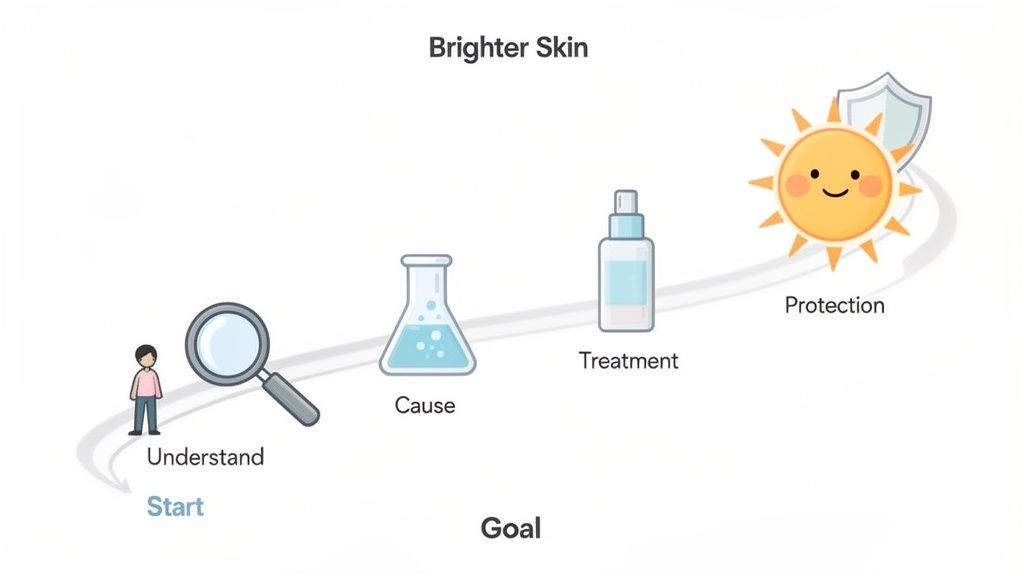
Everyone wants an even, radiant skin tone, but the process can feel completely overwhelming. Dark spots, known as hyperpigmentation, are one of the most common issues we see. They might be a stubborn reminder of a past breakout, the result of too much sun, or patchy discoloration from hormonal changes. No matter the cause, they all come from one thing: an overproduction of melanin, your skin’s natural pigment.
Instead of just throwing a list of products at you, we’re going to break down the why behind each step. The single most important part of this process is understanding what’s causing your specific dark spots. After all, a mark left over from acne needs a different approach than discoloration caused by years of sun damage.
Setting Realistic Expectations
Before we get into the good stuff, let’s get our mindset right. Fading hyperpigmentation is definitely a marathon, not a sprint. Some lighter spots on the surface might fade in a few weeks, but deeper, more stubborn marks can often take several months of consistent care to disappear.
You won't find success with a single "miracle" product. The real secret is building a smart, sustainable routine that combines dedicated treatment, daily protection, and a healthy dose of patience.
Here’s a sneak peek of what you’ll learn in this guide:
- What’s Really Going On: We’ll break down the different types of hyperpigmentation—from post-inflammatory marks to melasma—so you can finally identify what you’re dealing with.
- The Best Ingredients That Work: You’ll get to know the key players like Kojic Acid, Vitamin C, and retinoids that are proven to deliver visible, lasting results.
- Your Step-by-Step Routine: We will lay out a clear framework for your daily and weekly skincare regimen so you know exactly what to do.
- Customized Advice: Find targeted tips for your specific skin concerns, whether you have sensitive, acne-prone, or melasma-affected skin.
By the time you're done, you'll have the confidence and knowledge to take back control of your skin and start your journey toward the clear, even complexion you deserve.
Understanding What Causes Dark Spots
If you want to get rid of dark spots for good, you first have to understand what you’re up against. Think of yourself as a detective for your own skin. Every spot has a backstory, and knowing where it came from is the only way to pick a treatment that will actually work.
At the end of the day, every dark spot is a form of hyperpigmentation. It’s just a technical term for when your skin produces too much melanin in one specific area.
Melanin is the pigment that gives your skin, hair, and eyes their natural color. But when certain skin cells, called melanocytes, go into overdrive, they create a surplus of pigment. The result? A spot that’s noticeably darker than the skin around it. This isn't random—it's always a reaction to some kind of trigger. Your job is to figure out what that trigger is.
This isn’t just a niche concern; people all over the world are looking for solutions. The hyperpigmentation treatment market is on track to grow from $1.39 billion to $2.02 billion by 2030. A huge piece of that pie—over 40%—is topical treatments, simply because they're easy to get, affordable, and usually gentle on the skin.
The Three Main Culprits Behind Dark Spots
While a lot of things can cause a dark spot, most of them fall into one of three main categories. Figuring out which one you have is the most important first step you can take.
-
Post-Inflammatory Hyperpigmentation (PIH): This is the mark that gets left behind after your skin has been through some kind of trauma or inflammation. The most common culprit is acne, but it can also show up after a bug bite, a scratch, or even a bad rash. It looks like a flat discolored spot that can be anything from pink and red to brown or black, depending on your skin tone.
-
Sun Spots (Solar Lentigines): These are a direct result of all the sun exposure you’ve gotten over the years. They usually pop up as flat, oval-shaped brown spots on areas that see the most sun—think your face, hands, shoulders, and arms. They are basically concentrated little patches of sun damage.
-
Melasma: Often called the "mask of pregnancy," melasma is driven by hormonal changes. It appears as larger patches of brown or grayish-brown discoloration, and it’s usually symmetrical on the face. You’ll see it on the cheeks, forehead, bridge of the nose, and upper lip. Sun exposure is a major trigger here and will make melasma patches much darker.
Identifying Your Type of Dark Spot
So, how can you tell which is which? The context is everything. Did that spot show up right after a bad breakout? That’s probably PIH. Are you starting to see small, distinct brown spots on your hands or the tops of your cheeks after years of fun in the sun? Those are likely sun spots. If you're seeing larger, more symmetrical patches, especially after a pregnancy or starting a new birth control pill, melasma is the most likely suspect.
Key Takeaway: You can't treat what you don't understand. A dark spot from a pimple needs a totally different game plan than hormonal melasma. By identifying the root cause, you can stop wasting time and money on the wrong products.
Knowing these differences is crucial. For example, a treatment that works wonders for clearing up PIH might not do much for deep-seated melasma, which often needs a much more targeted approach. For a deeper dive into this, check out our article on what causes dark spots. This is the foundational knowledge you need to finally get that clear, even-toned complexion you’re looking for.
Your Guide to Dark Spot Fighting Ingredients
Trying to figure out which skincare ingredients actually work for dark spots can feel overwhelming. With so many products making big promises, it’s hard to cut through the noise. The secret isn't in the marketing hype; it's about understanding what really works and why. To see real progress, you need to know the best ingredients for hyperpigmentation and how they function.
Think of these ingredients as a team of specialists for your skin. Some are great at stopping melanin production in its tracks, while others work by getting rid of old, discolored skin cells faster. The real magic happens when you combine them strategically to build a routine that finally gets rid of those stubborn spots.
You don’t need to resort to expensive, invasive procedures to see a real difference. In fact, topical treatments are leading the charge because they're effective, affordable, and you can use them right at home. This shift towards accessible, at-home solutions is why ingredients like kojic acid are more popular than ever.
Kojic Acid: The Natural Brightener
When it comes to natural skin brighteners, Kojic Acid is a true game-changer. It's derived from fungi during the fermentation of foods like Japanese sake and soy sauce, and it's celebrated for its incredible ability to stop excess melanin production.
How does it work? Kojic Acid blocks tyrosinase, which is the enzyme your skin absolutely needs to create melanin. By putting a stop to this process, it helps fade the dark spots you already have while preventing new ones from ever showing up. This makes it a fantastic choice for tackling sun spots, age spots, or the dark marks left behind by acne.
Pro Tip: A Kojic Acid cleansing bar is a perfect way to introduce this ingredient into your routine. It allows you to gently treat discoloration on both your face and body without being too harsh.
Vitamin C: The Protective Antioxidant
Vitamin C does so much more for your skin than you might think. It's a powerhouse antioxidant that plays a dual role in fighting discoloration. First, it helps to fade existing spots, and second, it acts as a shield to protect your skin from the environmental triggers that cause them in the first place.
Just like Kojic Acid, Vitamin C also gets in the way of that tyrosinase enzyme, slowing down melanin. But its true strength lies in its antioxidant power. It neutralizes the damaging free radicals from UV rays and pollution before they have a chance to cause hyperpigmentation, making it a non-negotiable part of any morning skincare regimen.
Retinoids: The Cellular Accelerators
Retinoids, which are all derived from Vitamin A, are famous for their anti-aging powers, but they are also incredibly effective for creating a more even skin tone. Their main job is to speed up cellular turnover. In simple terms, they push your skin to shed old, pigmented cells more quickly so that fresh, new, evenly-toned cells can take their place.
This rapid, deep exfoliation works wonders on the appearance of dark spots, fine lines, and any rough texture.
- Prescription-Strength: Tretinoin is a powerful option you can get from a dermatologist for more stubborn concerns.
- Over-the-Counter: Retinol is a gentler, widely available alternative that’s perfect if you’re just starting out.
If you're new to retinoids, start slow. Use a low concentration just a few nights a week and let your skin get used to it before increasing the frequency. This will help you avoid unnecessary irritation.
This chart can help you see how common triggers, from a bad breakout to too much sun, can all lead to those frustrating dark spots.
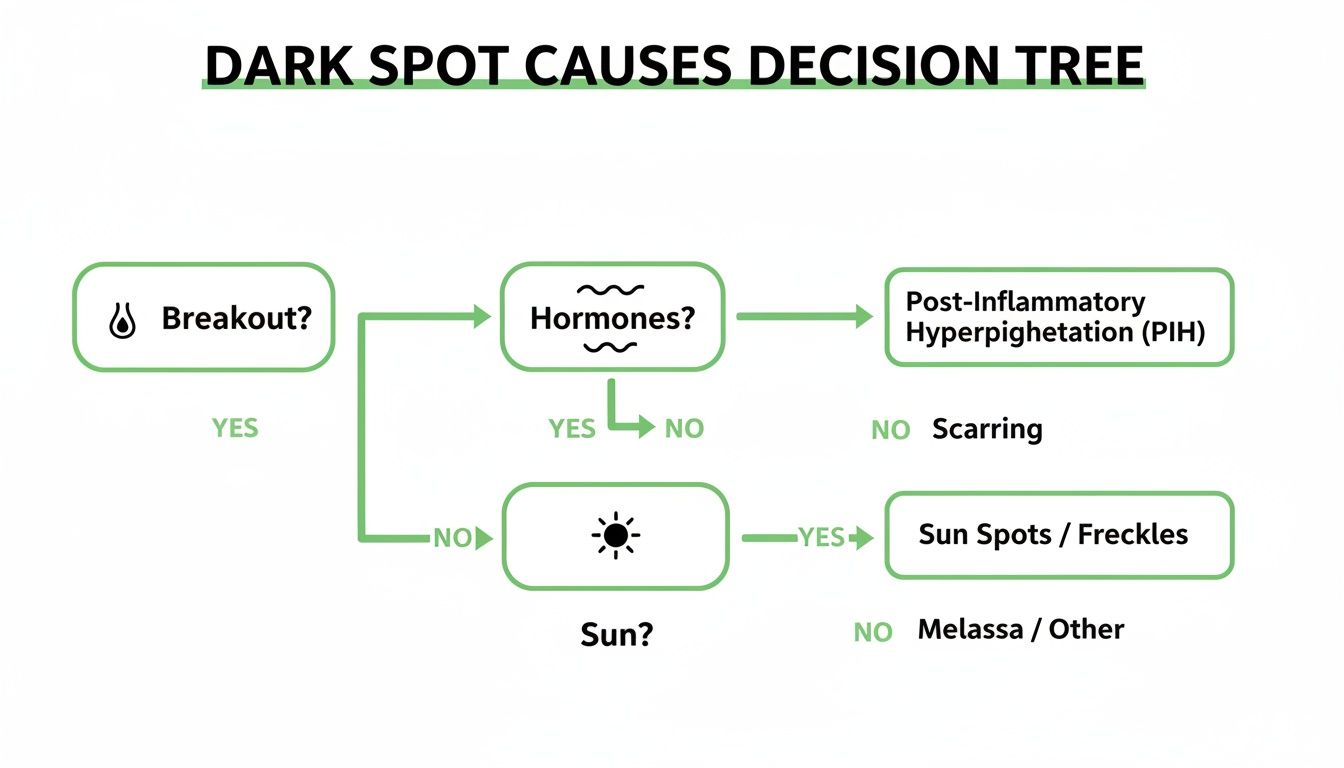
As you can see, different paths—like the inflammation from acne or even hormonal changes—can end up in the same place: hyperpigmentation.
AHAs and BHAs: The Surface Exfoliators
While retinoids are busy working deep within the skin, Alpha Hydroxy Acids (AHAs) and Beta Hydroxy Acids (BHAs) are handling business on the surface. These are chemical exfoliants that dissolve the bonds holding dead, dull skin cells together, allowing them to be gently swept away.
This not only reveals brighter and more even skin underneath but also clears the way for your other treatment products to absorb better and work more effectively.
- AHAs (like Glycolic and Lactic Acid): These are water-soluble, making them ideal for surface-level issues like sun damage and general dullness.
- BHAs (like Salicylic Acid): This one is oil-soluble, so it can get deep into your pores to clear out clogs, making it the perfect choice for post-acne marks.
Adding one of these exfoliants into your routine once or twice a week is a fantastic way to boost your results.
To make choosing a bit easier, here’s a quick comparison of the top ingredients we’ve covered.
Choosing Your Dark Spot Fighting Ingredient
| Ingredient | Primary Action | Best For | Skin Type Suitability |
|---|---|---|---|
| Kojic Acid | Inhibits melanin production | Sun spots, age spots, PIH | Generally well-tolerated by most skin types |
| Vitamin C | Antioxidant protection, inhibits melanin | Preventing new spots, overall brightness | All skin types, especially for morning routines |
| Retinoids | Speeds up cell turnover | Stubborn spots, uneven texture, anti-aging | Normal to oily skin; use with caution on sensitive skin |
| AHAs/BHAs | Surface exfoliation | Dullness, post-acne marks, clogged pores | AHAs for dry/normal skin; BHAs for oily/acne-prone skin |
By understanding these key players, you can start building a routine that’s perfectly suited to your skin’s needs. For a deeper dive, check out our guide to demystifying the ingredients in skin lightening products.
How to Build a Routine for Fading Dark Spots
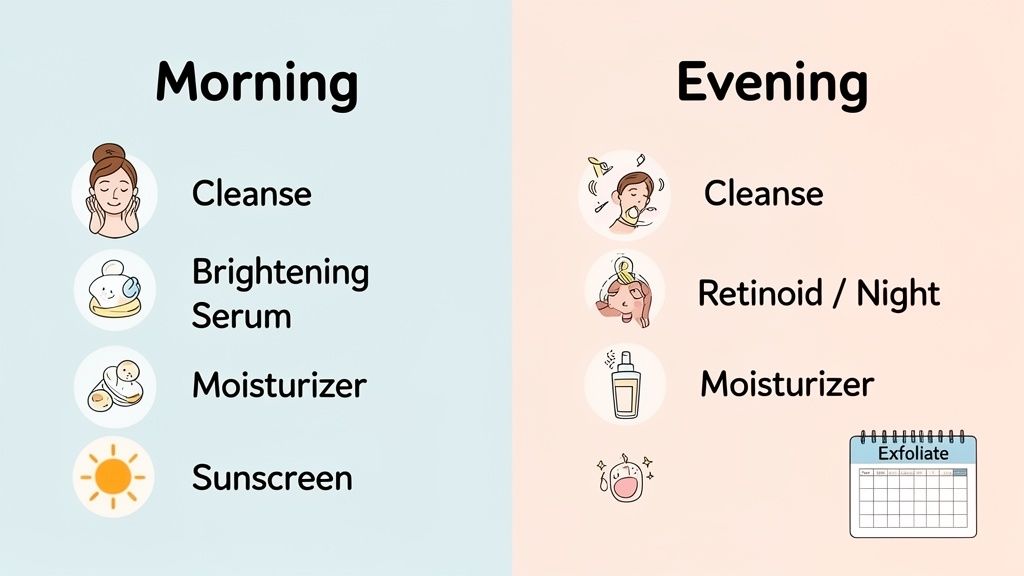
Knowing which ingredients to use is a great start, but the real secret to getting rid of dark spots for good is consistency. Having a dedicated daily routine ensures your skin gets the right ingredients at the right time, making them more effective while preventing irritation. The goal isn't to be complicated; it's to create a simple framework you can actually stick with.
The easiest way to think about it is in two parts. Your morning routine is all about protection—shielding your skin from the sun and pollution that make spots worse. Then, your evening routine is for treatment and repair, letting those powerful ingredients get to work while you sleep.
This simple rhythm of protecting by day and treating by night is the foundation for clear, even-toned skin. It's not about using a million products, but about using the right ones in the right order, every single day.
Your Morning Skincare Blueprint
Your morning routine needs to be fast, efficient, and focused on one thing: stopping new dark spots from forming. Sun exposure is the biggest enemy here. UV rays don't just create new spots; they make the ones you already have much, much darker.
Here’s a simple but powerful morning plan:
- Gentle Cleanse: Start with a mild cleanser that won’t strip your skin. A Kojic Acid cleansing bar is perfect because it gives you a gentle brightening boost right from the start without causing any dryness.
- Brightening Serum: Next, apply an antioxidant serum. Vitamin C is the top choice for good reason. It helps fight off damage from UV rays and pollution, acting as a second line of defense under your sunscreen while actively brightening your skin.
- Moisturizer: Follow up with a lightweight moisturizer to keep your skin hydrated and its barrier strong. A healthy skin barrier is less likely to get inflamed, which is a major cause of post-acne marks.
- Sunscreen (The Non-Negotiable): This is the most important step, period. You have to apply a broad-spectrum sunscreen with an SPF of 30 or higher every single morning, whether it's sunny or cloudy. If you skip this, everything else you're doing is basically a waste of time.
Crucial Takeaway: Sunscreen isn't just for the beach. UVA rays—the ones that cause aging and hyperpigmentation—go right through clouds and windows. Daily use is the best thing you can do to prevent dark spots.
Your Evening Treatment Regimen
At night, your skin naturally switches into repair mode. This is the perfect time to use your most powerful treatment products because they can penetrate deeply and work without being interrupted by sun exposure.
Your evening routine is where you bring in the heavy hitters, like retinoids or targeted spot treatments.
- Double Cleanse: Always start by removing your makeup, sunscreen, and the day's grime with an oil-based cleanser. Follow that with your regular gentle cleanser to make sure your skin is perfectly prepped for treatment.
- Targeted Treatment: Now it’s time for your power-packed serums. This could be a retinoid to speed up cell turnover, a concentrated brightening serum, or a specific spot treatment that you apply only to the dark spots.
- Hydration: Always finish with a good moisturizer to lock in your treatments and help your skin recover overnight. This is especially important if you're using something that can be drying, like a retinoid.
The Role of Weekly Exfoliation
If you really want to boost your results, you need to exfoliate weekly. Dead skin cells build up on the surface, making your skin look dull and blocking your expensive serums from getting where they need to go.
By sloughing off that top layer, you do two things. First, you instantly get brighter, fresher-looking skin. Second, you clear the way for your treatment products to work much more effectively on the new skin cells underneath.
Try adding one of these to your routine 1-3 times per week, usually at night:
- An AHA/BHA Toner or Peel: These chemical exfoliants gently dissolve the "glue" that holds dead skin cells together.
- A Gentle Scrub: If you prefer a physical scrub, make sure it has very fine, smooth particles. You want to avoid anything harsh that could cause tiny scratches and more inflammation.
When you combine a protective morning routine, a potent evening regimen, and consistent weekly exfoliation, you're fighting hyperpigmentation from every angle. For more ideas on building an effective brightening routine, this product is an excellent one to start with has some excellent tips focused on brightening and keeping your skin barrier healthy.
Tailoring Your Approach for Different Skin Types
When you’re trying to figure out how to get rid of dark spots, you quickly learn that what works for one person might not do a thing for you. Your skin type is really the most important piece of the puzzle. Without considering it, you’re just guessing—and sometimes, you can even make things worse.
Customizing your routine isn't just a nice idea; it's essential. The demand for targeted hyperpigmentation treatments is exploding, with the global market expected to reach $11.54 billion by 2034. It’s pretty telling that conditions like melasma and PIH account for 40% of that market revenue, as highlighted by The Insight Partners' market analysis. People want solutions that work for their specific issues.
Tips for Sensitive Skin
If your skin is sensitive, the idea of slathering on powerful active ingredients can be nerve-wracking. The golden rule here is to start low and go slow. This helps you avoid triggering inflammation, which ironically, can lead to even more dark spots.
- Patch Test Everything: Before putting a new product on your face, try it out on a small patch of skin first, maybe behind your ear or on your inner arm. Give it a few days to see if any irritation pops up.
- Introduce One New Product at a Time: Don't throw a bunch of new actives at your skin all at once. Give your skin at least two weeks to get used to one new ingredient before you think about adding another. If something goes wrong, you'll know exactly who the culprit is.
- Try Buffering: This is a great little trick. Apply a simple, gentle moisturizer before your treatment serum. It creates a soft barrier that can take the edge off potent ingredients like retinoids without completely blocking their effects.
Strategies for Acne-Prone Skin
For anyone with acne-prone skin, it feels like fighting a war on two fronts: you’re dealing with active breakouts while also trying to fade the dark marks they leave behind. The trick is to find ingredients that can multitask without clogging your pores.
Always look for products labeled "non-comedogenic," which is just a fancy way of saying they won’t block your pores. Salicylic acid (a BHA) is a true hero for acne-prone skin. It exfoliates the surface to help fade spots, but it also gets deep into the pores to clear out oil and gunk, which helps stop future breakouts from forming.
Remember, picking at blemishes is one of the fastest ways to create a dark spot that can last for months. A hands-off approach is your best defense against PIH.
Addressing Stubborn Melasma
Melasma is a different beast altogether. It requires a really dedicated strategy because it's often triggered by internal factors, like hormones, on top of sun exposure. It can be incredibly persistent, but the right routine can make a huge difference.
Your game plan should be built on two main pillars:
- Tyrosinase Inhibitors: These are ingredients that get in the way of the enzyme responsible for making melanin. Kojic acid is fantastic for this because it basically puts the brakes on pigment production, which helps fade those stubborn melasma patches.
- Uncompromising Sun Protection: This is completely non-negotiable if you have melasma. The sun is the number one trigger that makes it darker and more obvious. You absolutely have to wear a broad-spectrum, mineral-based sunscreen with at least SPF 30 every single day and reapply it.
Figuring all of this out can feel like a lot, but understanding what your skin is trying to tell you is the first real step toward getting the results you want. For more detailed advice, check out our guide on which skin lightening products to use for your skin type.
Your Top Questions About Fading Dark Spots
When you start the journey to clear up dark spots, a lot of questions pop up. It can feel like a complicated process, but getting straight answers makes all the difference. We’ve pulled together the most common questions to help you know what to expect and build a routine that actually gets you there.
Getting a handle on how long it takes, whether spots can come back, and what ingredients you can safely use together is key. Let's dive into these important topics so you can move forward with confidence.
How Long Does It Realistically Take to See Results?
If there's one secret ingredient in this process, it's patience. Fading hyperpigmentation is definitely a marathon, not a quick sprint. If you're sticking to a targeted routine every single day, you can generally start seeing some initial changes in about 4 to 8 weeks. This might just be a subtle lightening or the spots looking a little less harsh.
For those more significant, "wow" results, it often takes a bit longer—usually somewhere in the 3 to 6 month range. The timeline really depends on how deep and old the spot is, and of course, your skin type. The absolute biggest factor in speeding things up? Being completely consistent, especially with applying your sunscreen daily.
Can Dark Spots Come Back After I Get Rid of Them?
Unfortunately, yes, they can. The number one reason dark spots make a comeback is new or repeated sun exposure. It’s so easy for the sun to reactivate melanin in those same areas you worked so hard to clear. Hormonal changes can also cause melasma to reappear, even after you've successfully faded it.
The best way to keep your skin clear is with a smart maintenance plan. This means you'll want to keep using your brightening products, maybe just less often, and—most importantly—wear a broad-spectrum sunscreen every single day. No exceptions! This is what will protect your skin and lock in your results.
Is It Safe to Mix Different Brightening Ingredients?
Mixing ingredients can be a great way to get better results, but you have to be strategic about it. Some ingredients are a perfect match. For example, a classic power duo is using an antioxidant like Vitamin C in the morning and then a retinoid at night. This approach tackles discoloration from a couple of different angles.
However, you don't want to layer too many strong products at once, like using an AHA and a retinoid in the same go. That's a fast track to over-exfoliation, which leaves you with red, irritated skin. The golden rule is to introduce just one new active ingredient at a time. Always do a patch test first to see how your skin handles it. This is the best way to get maximum results with minimum risk.
Ready to build a routine that delivers visible results? Tonique Skincare offers expertly formulated products with natural ingredients like Kojic Acid designed to gently and effectively fade dark spots for a clearer, more even complexion. Discover your personalized solution at https://www.toniqueskincare.com.
Written with Outrank